
Mercosur-EU agreement moves forward and creates a market of 720 million.
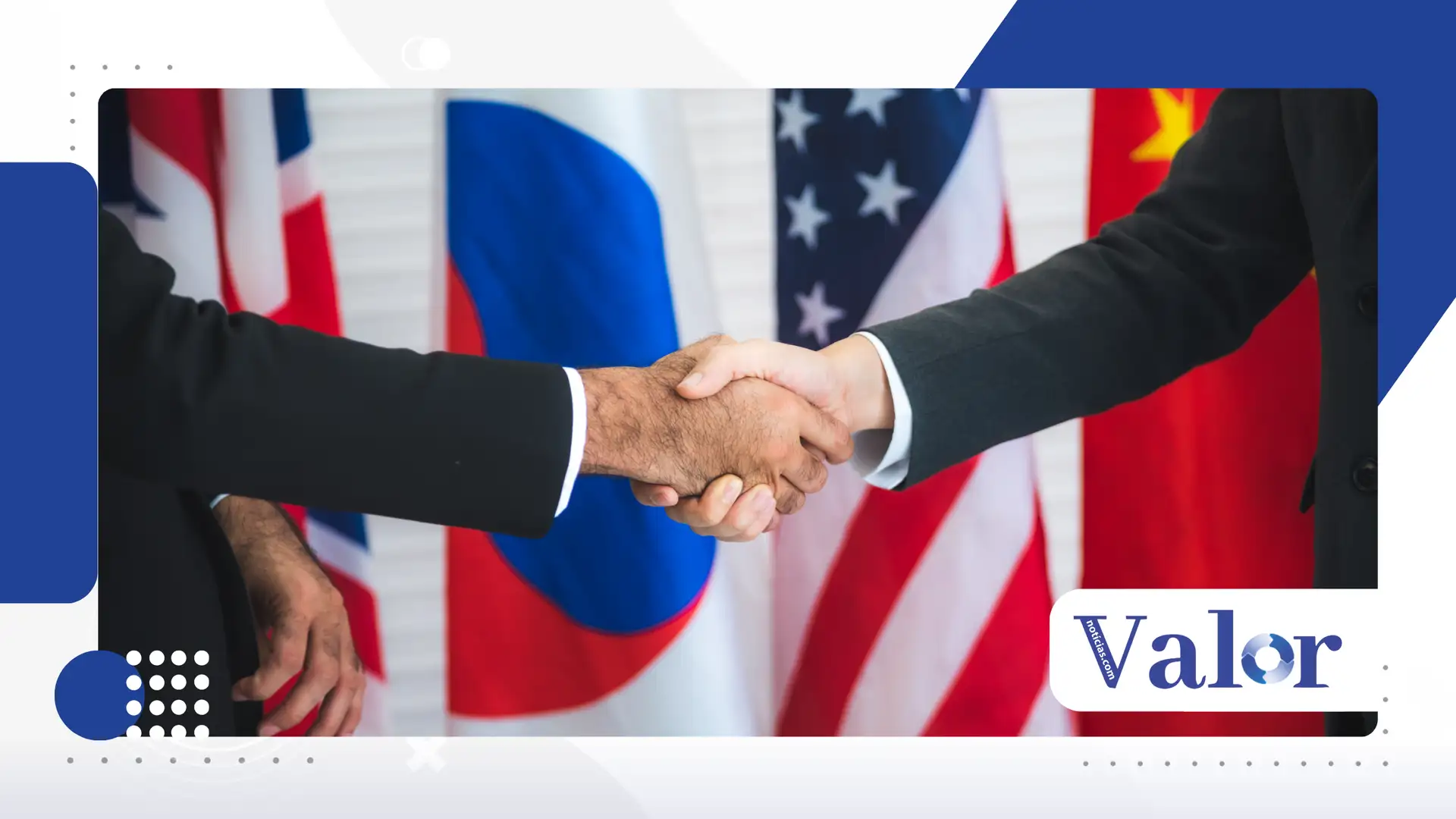
THE Mercosur-EU Agreement It solidified in March 2026 as a historic milestone for global economic diplomacy, uniting two blocs that together represent 720 million consumers.
Advertisements
This strategic alliance not only removes centuries-old tariff barriers, but also redefines global supply chains at a time of trade fragmentation and geopolitical uncertainty.
The ratification of this treaty represents a victory for multilateralism, allowing Brazilian companies access to a sophisticated market with a Gross Domestic Product (GDP) of US$22 trillion.
Furthermore, the pact establishes strict guidelines on sustainability, requiring that economic growth go hand in hand with environmental protection and the Paris Agreement.
To understand the implications of this integration, we have prepared this comprehensive guide on the new rules, implementation deadlines, and sectors that will benefit most.
Browse the topics below and discover how the trade landscape between South America and Europe will change dramatically starting this year.
Table of Contents
- What changes with the approval of the treaty in 2026?
- Which sectors of the Brazilian economy will benefit the most?
- How do environmental clauses impact agricultural exports?
- What is the timeline for reducing customs tariffs?
- How can companies prepare for the European market?
What changes with the approval of the treaty in 2026?
The entry into force of Mercosur-EU Agreement It introduces unprecedented institutional predictability, drastically reducing transaction costs for exporters and importers.
The Brazilian government projects that the higher revenue will offset any potential losses in import taxes, estimated at R$ 683 million for this first year.
The initial focus is on facilitating trade in goods and services, ensuring that technical standards do not become invisible barriers.
With its approval by the Brazilian Senate in March 2026, the country signals to the world its willingness for a modern and competitive economic opening.
This integration promotes the attraction of foreign direct investment, since European investors begin to see legal security in the South American bloc.
Strengthening Mercosur as a preferred partner of the European Union balances the power dynamic with respect to other Asian and North American trading powers.
Which sectors of the Brazilian economy will benefit the most?
The processing industry and value-added agribusiness lead the list of immediate winners with the Mercosur-EU Agreement.
Sectors such as machinery, equipment, automobiles, and chemicals will have tariffs gradually reduced to zero, allowing European technology to modernize national factories in a more accessible way.
In the field of exports, products such as orange juice, fruits, and vegetable oils now find a tax-free route.
For meat and biofuels, the quota system guarantees a linear increase in sales, protecting local producers while expanding Brazil's presence.
The service sector is also gaining momentum, with new opportunities for technology, architecture, and engineering companies wishing to operate in the European market.
Reciprocity in public procurement opens up a billion-dollar niche for Mercosur companies to participate in tenders in any of the 27 member states of the European Union.
++ Economic outlook for the first half of 2026
Comparative Analysis of Economic Impacts (Projections 2026-2035)
| Economic Indicator | Estimated Impact (Brazil) | Implementation Timeline |
| GDP growth | + R$ 87 billion | Up to 15 years old |
| Total Investments | + 0.76% (R$ 13.6 bi) | Immediate start |
| Exports to the EU | + US$ 7 billion | Progressive over 10 years |
| Industrial Tariffs | Reduction of 91% | Between 0 and 15 years old |
How do environmental clauses impact agricultural exports?
Sustainability has ceased to be an optional add-on and has become the central pillar of... Mercosur-EU Agreement in 2026.
The binding text establishes that the products benefiting from the program cannot be associated with illegal deforestation, reinforcing Brazil's commitment to strict control of the Amazon.
Exporters who already adopt traceability practices and green certifications will have an immediate competitive advantage, as the European Union has not relaxed its sanitary standards.
Satellite monitoring and the Rural Environmental Registry (CAR) are becoming essential tools to ensure that meat and soy reach European supermarket shelves without restrictions.
Experts point out that these requirements, while challenging, serve as a global quality seal for Brazil.
By meeting the climate goals of the treaty, the country attracts ESG (Environmental, Social, and Governance) investment funds, which seek long-term sustainable projects in Latin America.
++ PIS/Pasep 2026 salary bonus: see all the necessary information.
What is the timeline for reducing customs tariffs?

The tax exemption provided for in Mercosur-EU Agreement It follows a staggered schedule to avoid sudden shocks to the domestic industry.
While the European Union will eliminate tariffs on 95% goods from Mercosur within 12 years, the South American bloc will have up to 15 years to eliminate tariffs on 91% products from Europe.
Sensitive products, such as wines and dairy products, have longer grace periods so that local producers can adapt to the new competitive reality.
However, many industrial items, such as auto parts and electronic components, are already feeling the effects of the tariff reduction in the first few months of the agreement's implementation.
This phasing allows the Brazilian economy to transition to a more globalized cost structure without destroying local production chains.
The predictability of this calendar is fundamental for companies' strategic planning to align investments in production capacity and technological innovation in the coming years.
How can companies prepare for the European market?
Success within the context of Mercosur-EU Agreement It requires managers to focus on regulatory compliance and the digitization of processes.
Adapting environmental compliance to the new EU requirements is no longer just an ethical issue, but a mandatory condition for remaining in high-income markets.
Investing in data intelligence and logistics traceability reduces the risks associated with non-tariff barriers, which often arise after tax cuts.
Companies should seek strategic partnerships with European importers to understand consumer preferences, which increasingly value products with a low carbon footprint.
Training teams on technical standards and intellectual property rights is also a crucial step in taking advantage of loopholes in the treaty.
Easier access is just the gateway; real competitiveness will come from the superior quality and operational efficiency that Brazilian companies demonstrate on the international stage.
++ DTE will become mandatory for legal entities starting in 2026.
Conclusion
The definitive advance of Mercosur-EU Agreement In 2026, decades of uncertainty will end, opening a horizon of prosperity for the South American economy.
Although the challenges of implementation and adaptation are real, the long-term benefits for GDP and the generation of skilled jobs outweigh the risks.
Brazil is taking a leading role in the climate and trade agenda, proving that it is possible to reconcile robust exports with the environmental preservation demanded by the modern global market.
This is the time for entrepreneurs and policymakers to work in harmony, ensuring that trade liberalization results in real gains for society as a whole.
Keeping up with updates and technical standards will be the key differentiator for those who wish to lead this new chapter in Brazilian economic history.
Learn more about bilateral trade statistics on the website of ApexBrasil.
FAQ: Frequently Asked Questions about the Mercosur-EU Agreement
1. When does the agreement officially come into effect?
The trade agreement provisionally entered into force in 2026, shortly after ratification by the Council of the European Union and approval by the Brazilian National Congress, pending final steps from other members.
2. Will the agreement lower the price of imported products in Brazil?
Yes, a gradual reduction in the prices of European electronics, automobiles, wines, cheeses, and cosmetics is expected as import tariffs are eliminated according to the official schedule.
3. Can small businesses also benefit?
Certainly, because the treaty includes specific chapters to simplify customs procedures and facilitate access for small and medium-sized exporters to the European market through digital platforms and technical cooperation.
4. What happens if Brazil fails to meet its environmental targets?
THE Mercosur-EU Agreement It has binding clauses that allow for the temporary suspension of trade benefits in the event of serious and proven violations of the commitments of the Paris Agreement or uncontrolled illegal deforestation.
5. How will public procurement be affected by the new treaty?
Brazilian companies will be able to compete for supply contracts with European governments on an equal footing with local suppliers, and European companies will have the same right in federal tenders in Brazil, promoting greater transparency.
