
Card brands influence where credit can be used.
To the card flags They influence where credit can be used in the global market, as they directly define operational rules, acceptance at payment terminals, and territorial transaction limits.
Advertisements
There's a curious detail about the moment we bring the plastic card close to the terminal at the checkout: we rarely think about the invisible mechanism that validates that transaction in fractions of a second.
To avoid unpleasant surprises when paying a restaurant bill or checking out on an e-commerce site, it's worth understanding how this ecosystem really works behind the scenes.
Summary
- What is a payment arrangement in the financial market?
- How do card brands determine acceptance at establishments?
- What is the difference between a card brand, an issuer, and an acquirer?
- What factors determine where your credit is accepted?
- Comparative overview of the national financial market.
- How do I choose the best option for my consumption profile?
- Impact of e-commerce on payment acceptance
- The evolution of card payment terminals and the breaking of exclusivity.
- The role of proximity technology and digital wallets.
- Strategies to ensure credit acceptance for travel.
- Regulation and market trends for the coming years.
- Frequently Asked Questions (FAQ)
- Final Considerations
What is a payment arrangement in the financial market?
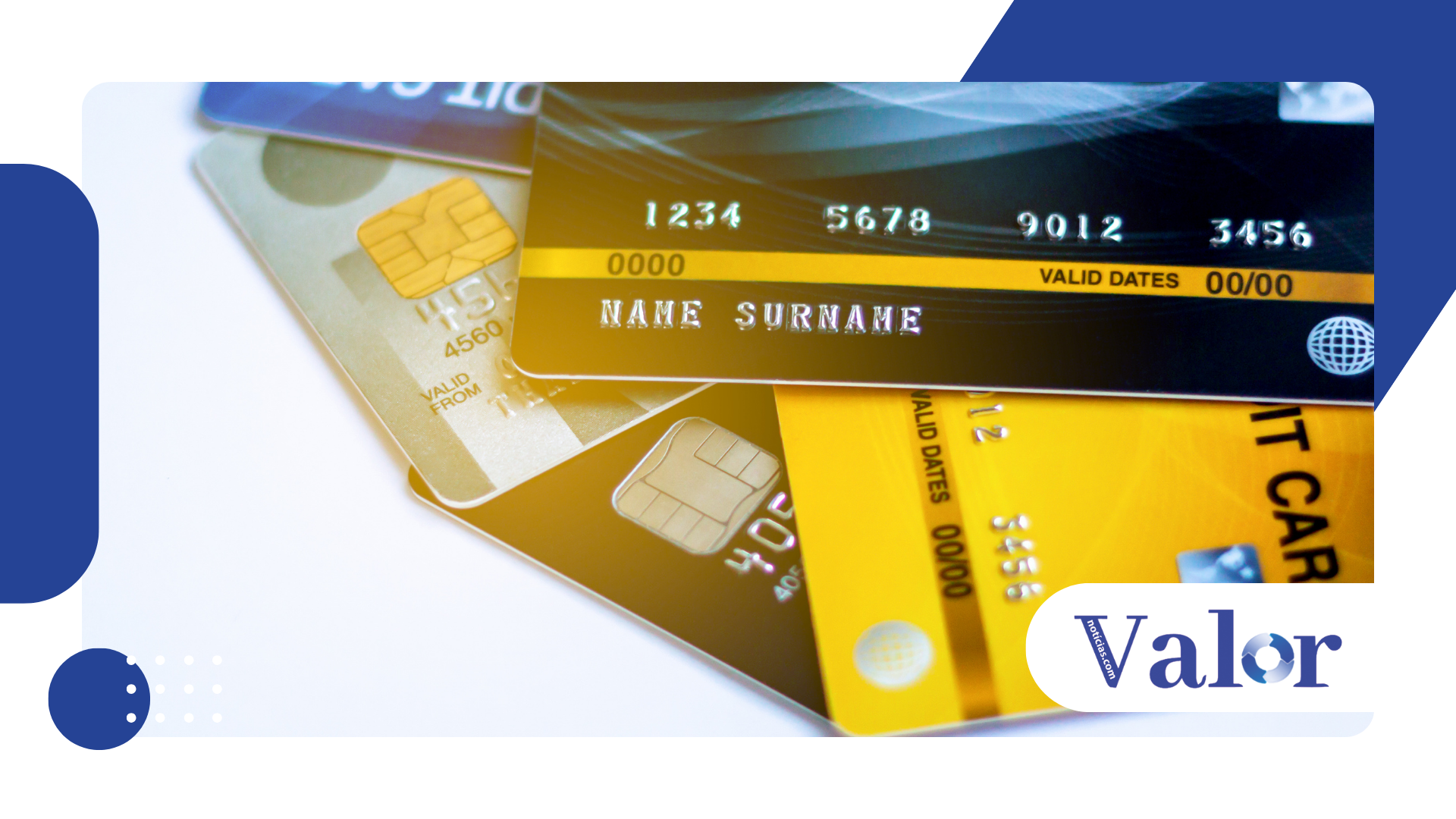
The digital payment ecosystem depends on a robust infrastructure regulated by the Central Bank of Brazil to process financial transactions quickly, efficiently, and securely.
Within this operational structure, the card flags They function like global or national networks that connect financial institutions issuing credit to merchant payment terminals.
They establish the set of technical rules, interbank fees, and international security standards that make instant financial settlement possible between the buyer and seller of the service.
There's something fascinating about this engineering: without this rigid standardization, banks would have to negotiate contract by contract with each small merchant, paralyzing the scale of modern consumption.
The payment arrangement acts as a kind of universal translator for the banking system, ensuring that money leaves one point and arrives at its destination with mathematical integrity.
How do card brands determine acceptance at establishments?
The reach of a payment method's commercial acceptance network depends directly on the agreements made between the payment processing network and the point-of-sale (POS) terminal acquiring companies.
When a merchant contracts a payment terminal, they select the operational networks enabled to process sales in their physical establishment or e-commerce platform on the internet.
If a given arrangement does not have an active contract with the acquiring company used by the merchant, the financial transaction is summarily rejected by the terminal at the exact moment the chip is read.
The central issue is usually financial: the exchange fees charged by card flags These costs directly impact the retailer's profit margin, often leading them to choose not to accept certain chains.
Exclusive brands or those focused on high-income niches charge higher fees, which explains why not every neighborhood café accepts certain cards on a daily basis.
Understanding this invisible filter saves you awkward moments at the counter and helps you design a smarter spending strategy for your wallet.
What factors determine where your credit is accepted?
Territorial coverage and the acceptance of a financial instrument depend on technical and contractual variables established between the operating company and the accredited sales market.
Geographic reach dictates the first major limitation, separating cards aimed solely at the domestic economy from those that operate seamlessly across international networks abroad.
Secondly, the architecture of the layout — divided between open or closed models — drastically changes the practical reach that the consumer encounters at the store terminals.
Open models allow transactions to flow freely through multiple acquirers, while closed loops require the administrator to capture the transaction itself on proprietary or previously authorized terminals.
Add to that the compatibility of physical chips, NFC proximity protocols, and support for digital wallets embedded in the operating systems of modern mobile phones.
To the Brazilian Central Bank guidelines on payment systems They maintain the ecosystem under clear rules, forcing operators to compete on a technologically level playing field.
What is the difference between a card brand, an issuer, and an acquirer?
To understand the circulation of credit in the market, it is essential to separate the roles of the issuing bank, the company that owns the arrangement, and the acquiring company responsible for capturing the signal.
The bank or fintech acts as the point of contact in the relationship: it evaluates your credit history, grants the credit limit, sends the monthly bill, and assumes the risk of customer default.
The network administrator, on the other hand, sells the technological highway through which the data travels and ensures that the security rules work anywhere in the world.
At the other end are the acquiring companies — the famous owners of the payment terminals — which connect the merchant's counter to the processing center of these global networks.
This triangle factors and divides the rate of each purchase; understanding this mechanism helps to determine who is responsible when a transaction is rejected for no apparent reason.
++ World Cup Miles: cards that accelerate point accumulation
Comparative overview of the national financial market.
The Brazilian market offers a variety of payment options, divided between globally recognized brands and companies focused exclusively on regional or national consumer demand.
Choosing the ideal option directly impacts the level of flexibility consumers will have in their routines for in-person shopping, international travel, or e-commerce transactions on the internet.
Analyzing the market coverage, geographic reach, and operational characteristics of each brand helps in making an informed decision when requesting a new financial product from banks.
Below, we have compiled a detailed table containing key comparative data on the brands most used by consumers and businesses nationwide during the current year.
| Brand Name | Geographic Coverage | Arrangement Model | Estimated Acceptance in Brazil | Main Product Focus |
| Visa | Global (More than 200 countries) | Open Arrangement | Extremely high (Over 99%) | General Use and International Travel |
| MasterCard | Global (More than 200 countries) | Open Arrangement | Extremely high (Over 99%) | General Use and Benefits Programs |
| Link | National and International | Open Arrangement | High in Brazil and Average Abroad | Brazilian Market and Local Partnerships |
| American Express | Global | Open/Closed Arrangement | Medium to High (Premium Focus) | High Income and Corporate Travel |
| Hipercard | National | Open Arrangement | Medium to High (Focus on Retail) | Retail Shopping and Supermarkets |
However, focusing solely on acceptance rates is a common mistake; the devil is in the details when you need to pay for an expense outside of major urban centers.
++ Additional card: who is responsible for the purchases and the debt?
How do I choose the best option for my consumption profile?
Selecting the ideal financial resource requires a detailed assessment of your daily shopping habits, travel routines, and the types of businesses you frequent.
Those who frequently cross borders need to prioritize established international networks, without ignoring currency conversion rates and IOF (tax on financial transactions) charged by the issuing country.
On the other hand, those who focus their routine on local retail may find more advantageous partnerships with domestic brands in local supermarket chains, drugstores, and gas stations.
Evaluate whether the product provides useful assistance for your actual routine, discarding generic insurance policies in exchange for annual fee waivers or usable miles.
Keeping cards from different networks in your wallet serves as a simple precaution against operational instabilities in payment processing systems when closing a transaction.
Analyzing these variables prevents problems and ensures that your money has the exact liquidity needed wherever you spend throughout the month.
Impact of e-commerce on payment acceptance
The expansion of online sales has reshaped the technical requirements for online stores when integrating payment gateways and intermediaries into the digital environment.
In the online environment, the card flags They play a vital role in security validation through advanced authentication protocols such as 3D Secure and data tokenization.
E-commerce businesses select their partners based on conversion rates and fraud protection; networks with high false positive rates end up losing ground in online checkouts.
This explains why plastics intended solely for the domestic market frequently face blocks when attempting to sign up for international software or pay for purchases on global e-commerce platforms.
Having at least one internationally recognized option in your digital wallet has become a basic requirement for consuming digital products and cloud services without frequent interruptions.
The evolution of card payment terminals and the breaking of exclusivity.
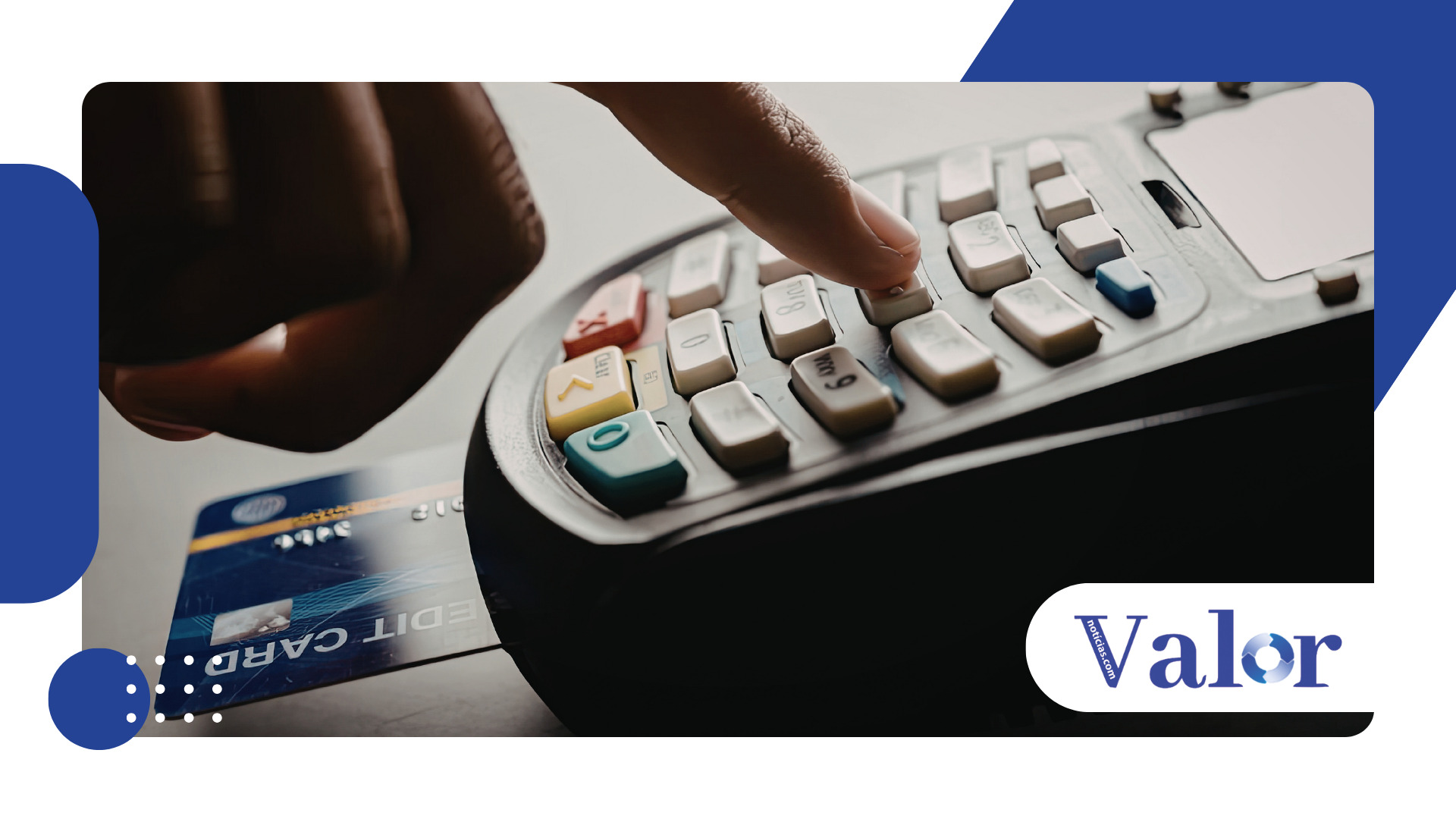
It's worth remembering that the scenario wasn't always this dynamic: until mid-2010, the Brazilian market was constrained by exclusivity agreements between specific credit card companies and brands.
The Central Bank and CADE (Brazil's antitrust agency) had to intervene to liberalize the market, forcing interoperability that allows any payment terminal to process virtually any card today.
This historic change lowered costs for small merchants, freeing them from having to pay exorbitant rents to have three or four different terminals at their counter.
Today, a brand's refusal to accept a product in an establishment has become a purely commercial choice for the retailer, who decides whether or not to pay the fee to that specific brand.
Nevertheless, contractual asymmetries persist, proving that regulation has opened doors, but the mathematics of the merchant's margin continues to have the final say.
The role of proximity technology and digital wallets.
Contactless payment has changed our relationship with fast consumption, but it has added an extra layer of technical requirements to the terminals and chips we carry in our wallets.
Near-field communication requires fine-tuning between the acquiring bank, the network owner, and the terminal's internal software for the sale to go through in less than a second.
In digital wallets, the dependency increases: the network administrator needs to establish direct agreements with mobile phone manufacturers to allow the secure tokenization of cards on smartwatches and smartphones.
If the company that owns your card does not have a contract with your mobile phone's technology provider, the contactless payment feature will remain inactive in your daily shopping routine.
Technological compatibility has thus become a selection criterion as critical as the traditional geographic reach of credit card brands.
Strategies to ensure credit acceptance for travel.
Structuring your financial logistics before packing your bags avoids common problems in places where the banking infrastructure operates under less sophisticated dynamics.
Small towns and more isolated tourist destinations tend to concentrate card acquisition in a few regional acquirers, which can restrict the acceptance of niche networks or exclusive cards.
Spreading your credit limit across two cards from different networks provides the necessary security to deal with signal instability or occasional refusals at restaurant and hotel terminals.
When traveling abroad, the travel notification in your bank's app remains essential to prevent the security algorithm from blocking your purchases due to suspected fraud.
Knowing the local customs of your travel destination ensures that your purchasing power remains active in case of any unforeseen event or emergency along the way.
++ Can a credit card exist without an account at the issuing bank?
Regulation and market trends for the coming years.
The advancement of digital media and the consolidation of Pix have placed enormous pressure on the traditional fee-charging model practiced by credit card networks in Brazil.
To avoid losing relevance in the face of instant, fee-free payments, payment processing companies are redesigning loyalty programs, cashback options, and settlement times for merchants.
This competition for market share brings transparency to the market and benefits the end consumer with lower costs and much simpler, more integrated payment experiences.
Paying attention to these regulatory developments helps identify which financial products make sense to keep in your portfolio and which have become just a useless expense in your annual budget.
To understand how the neutrality of competition protects the payments market, it is worth consulting the actions of... Administrative Council for Economic Defense on the financial sector in the country.
Frequently Asked Questions (FAQ)
How do I know which payment methods are accepted at a store?
Observe the stickers on the window display, look at the symbols on the checkout machine screen, or ask the cashier before scanning your items.
Why was my card declined at a store?
Reasons for refusal vary from insufficient credit limit, temporary blocking by the bank's security algorithm, dropped terminal connection, or the store not having a contract with that network.
Are all establishments in Brazil required to accept all brands?
The merchant has complete freedom to choose which networks they wish to accept, calculating the impact of interchange fees on their own business's profit margin.
What is the difference between having a national and an international credit card?
The national card limits its use to domestic commerce in local currency, while the international version authorizes in-person and digital spending abroad in foreign currencies.
Has Pix replaced the need for acceptance by operational networks in commerce?
Pix dominates cash transactions, but credit offered by traditional networks remains indispensable for those who need to pay for higher-value purchases in installments without compromising cash flow.
Do acceptance costs vary depending on the company that owns the arrangement?
Each brand imposes a different interchange fee, which explains why retailers readily accept certain networks and reject others to protect their operating profits.
Final Considerations
Deciding which payment method to use may seem like a trivial detail of daily life, but it has profound implications for our freedom to consume and control our household budget.
To the card flags They continue to dictate the routes through which credit travels, operating behind the scenes to connect buyers, sellers, and banking institutions with speed and security.
Knowing these rules of the game allows you to build a functional card portfolio, without wasting money on unnecessary fees and ensuring that your purchasing power works wherever you are.
Keeping up with changes in this sector is the most practical way to keep your financial choices updated, secure, and truly aligned with your lifestyle.
