
Credit cards are losing ground to Pix for recurring payments.
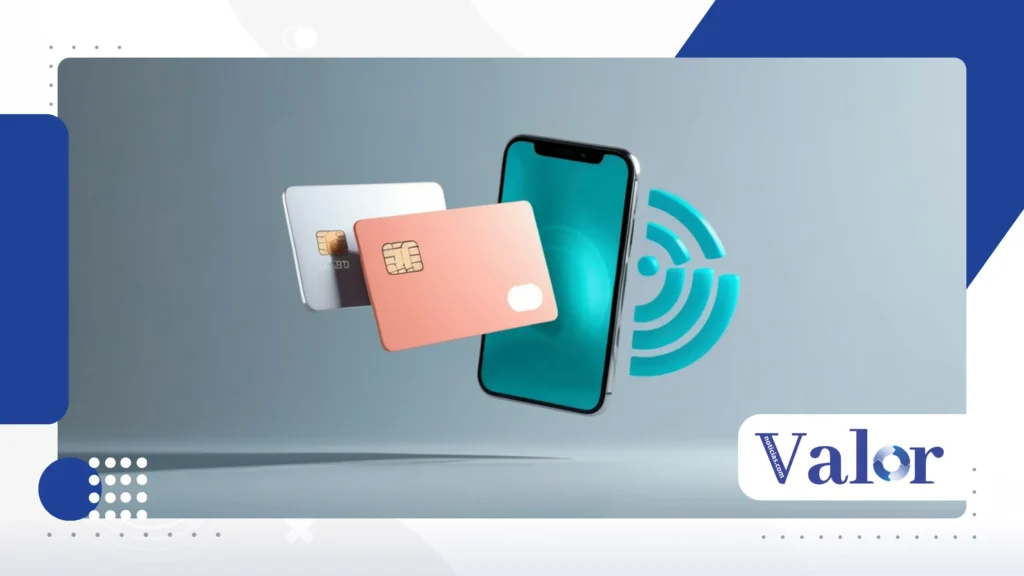
The fact that the Credit cards are losing ground to Pix. In the current Brazilian scenario, this is not merely a digital fad, but a structural disruption in the way money circulates.
Advertisements
What was once an absolute hegemony of plastics — sustained by frequent flyer programs and the habit of installment payments — now faces the aggressive efficiency of a system that never sleeps, doesn't charge annual fees, and, above all, doesn't impose costly intermediaries between those who pay and those who receive.
This transition to a recurring payment environment signals a shift in mindset. The average consumer, weary of complex bills and credit limits that seem more like traps than benefits, is beginning to see instant payments as an escape route to financial clarity.
We are witnessing the slow death of traditional banking bureaucracy in favor of an autonomy that, until recently, seemed unfeasible for mass commerce.
This article dissects how this migration is reshaping the market and why the resistance from credit card companies may be a losing battle in the face of the practicality of Automatic Pix.
Summary
- The gear of the Automatic Pix
- The decline in the convenience of plastic.
- Cash flow: relief for entrepreneurs
- Cybersecurity and the barrier against fraud.
- FAQ – What you still need to know
How does Pix Automático work for recurring payments?
The definitive arrival of Pix Automático, consolidated by recent Central Bank regulations, has changed the game by allowing scheduled payments to work without the friction of constant authentication.
Imagine the end of that annoying search for your card to update your streaming subscription or gym membership details; the process now flows natively and seamlessly within the banking ecosystem.
Unlike traditional direct debit, which has always been a bureaucratic terrain restricted to large companies with expensive banking agreements, Pix has democratized access to recurring payments.
Now, from small online courses to large energy companies, any player can automate their receivables with costs that are negligible when compared to card interchange fees.
This is where the Credit cards are losing ground to Pix.This is because the instant system eliminates the "toll" charged by card networks and payment processors, passing those savings directly on to the profit margin or the customer's pocket.
Payment ceases to be a financial event and becomes an efficient, silent, and underlying process.
Why is credit card ownership losing relevance in subscriptions?
The traditional credit model carries flaws that the digital economy of 2026 will no longer tolerate, such as the blocking of transactions due to "false positives" of fraud or the simple expiration of the card's validity.
Every time a card is canceled or replaced, companies lose customers in what the market calls involuntary churn — a technical failure that interrupts revenue.
Pix bypasses this bottleneck by being linked to a checking account and not to a physical or virtual object with an expiration date. If there is a balance, the charge occurs.
This stability is what has led financial managers to shift their marketing budgets toward encouraging the use of Pix, abandoning dependence on credit that is often denied without clear justification.
We then realized that the Credit cards are losing ground to Pix. At a time when financial predictability becomes more valuable than accumulating points in loyalty programs that require astronomical spending to offer meager returns.
+ Temporary virtual cards are becoming a growing protection against fraud.
What are the main financial advantages for the consumer?
For the user, the issue goes beyond technology; it's about mental health and managing household finances. Seeing the money leave the account at the time of payment creates a much more realistic perception of cost than the "billing shock" that occurs thirty days after actual consumption.
By opting for recurring payments via Pix, the average Brazilian avoids the snowball effect of revolving interest rates, which historically rank among the highest in the world.
There is an inherent honesty in paying in cash that credit, with its promise of "buy now and pay later," often masks with layers of invisible fees and charges.
The simplicity of managing all subscriptions on a single screen, without having to navigate through dense bank menus, reinforces the idea that... Credit cards are losing ground to Pix. Purely pragmatic. It's the victory of "less is more" applied to family financial planning.
+ Credit card security: new forms of fraud and prevention.
| Comparison Criteria | Credit card | Automatic Pix |
| Fee for the Retailer | 2.5% to 4.5% | 0.5% to 1% |
| Delivery Time | Up to 30 days | Snapshot |
| Risk of Churn | High (Expired card) | Low (Account Balance) |
| Cost to User | Possible Annual Fee | Free |
| Ease of Use | Data entry | QR Code or Key |
When should companies migrate to the instant payment system?
The ideal time for this transition is now, especially if your conversion rate is being hurt by systemic credit refusals that you can't control.
Businesses based on subscription plans, such as software (SaaS) and wine clubs, find in Pix a way to protect their revenue against the instabilities of the card market.
Implementing this change requires technical integration via modern APIs, which allow the sales system to "talk" to the bank in real time.
The result is a revitalized cash flow, where the money enters the account seconds after the charge, eliminating the agonizing wait for payments from credit card companies.
The market has already understood that the Credit cards are losing ground to Pix. not due to a failure of the credit system itself, but due to the logistical superiority of a system that was designed for the internet age, and not adapted from it, as happened with credit cards.
To deepen the understanding of the rules governing this technology, the Central Bank of Brazil payment regulations They provide the necessary technical support for this safe transition.
Which sectors are feeling the shift from cards to Pix the most?
Schools, colleges, and language courses were the first to notice that default rates drop when the payment method is simplified and no longer tied to the student's credit limit.
The education sector has found in Pix the solution to avoid the embarrassment of manual billing, automating the receipt of payments in a gentle and direct way into the account of the person responsible.
Public utility companies — such as energy and sanitation companies — also registered a massive increase in participation, abandoning the old physical payment slips that were frequently lost or expired due to forgetfulness.
Pix Automático solves this logistical gap with an efficiency that cards have never been able to fully deliver outside of major urban centers.
The transformation is so vast that the Credit cards are losing ground to Pix. Even in luxury niches, the speed of sale settlement allows retailers to offer perks and discounts that were previously consumed by the operators' administration fees.
What is the impact of security on the choice between Pix and Card?
Some people still hesitate for fear of scams, but the editorial truth is that Pix today has layers of encryption and authentication that a card, with its exposed numbers, will never have.
Facial biometrics and digital recognition make Pix transactions a personal and non-transferable operation, protecting the user against cloning, a still latent problem in the world of plastics.
The Special Refund Mechanism (MED) was the necessary response to fraud, allowing for the freezing and recovery of funds in illicit cases.
This network of legal and technological protection has provided the confidence that was lacking for consumers to finally abandon their fear of "making a Pix payment" to large companies.
This feeling of protection, combined with the fact that you don't need to carry a physical wallet, is the underlying reason why... Credit cards are losing ground to Pix. across all age groups and social classes in the country.
How has the 2026 scenario solidified this market trend?
We've reached 2026 with Pix not just as a payment method, but as the backbone of the Brazilian economy, influencing even how commerce is organized.
Credit card companies, in an effort to survive, are trying to add insurance and assistance benefits, but the sheer practicality of Pix continues to win popular preference.
Interoperability between different financial applications and the ease of contactless payments using a mobile phone have turned the plastic card into an almost nostalgic object, reserved for emergencies or international purchases.
Brazil has become the global laboratory for how a state-run payment system can surpass, in efficiency, private solutions that have been established for decades.
In this landscape of disruptive innovation, the diagnosis is clear: the Credit cards are losing ground to Pix. Because the market grew tired of complexity and embraced the fluidity of free services with security.
+ Reduced credit card limit reflects banks' caution in 2026.
Final Reflection
Pix's dominance over credit cards in recurring payments is an irreversible trend, driven by the relentless pursuit of less friction and more transparency.
We're not just changing the payment tool; we're changing our relationship with time and the value of money.
Companies that ignore this trend risk becoming obsolete, trapped by rates that erode competitiveness.
For the consumer, the benefit lies in a system that finally seems to work in their favor, simplifying what was previously a confusing journey of invoices and due dates.
The fact that the Credit cards are losing ground to Pix. Ultimately, it's the triumph of technology applied to real life, transforming financial management into something as natural as sending a text message.
To keep up with the economic analyses shaping this new market, the portal Economic Value It remains the essential reference for anyone wishing to understand the next steps in the digital revolution in Brazil.
FAQ – Frequently Asked Questions
1. Does automatic Pix have a cost for the end consumer?
For individuals, Pix Automático is completely free. The Central Bank maintains this policy to encourage banking inclusion and the efficiency of the national financial system.
2. Can I cancel a recurring Pix payment at any time?
Absolutely. Management is done directly through your bank's app, offering far greater control than with a credit card, where cancellation often requires contacting the company by phone.
3. Does Pix replace credit cards for installment purchases?
"Pix Parcelado" (installment payments via Pix) is already a solid reality in 2026, allowing you to split payments without affecting your credit card limit, often with more favorable interest rates.
4. What happens if I don't have enough funds on the day of the automatic Pix transfer?
The transaction fails due to insufficient funds. Unlike credit cards, which can lead to overdraft fees or revolving interest on your bill, Pix simply doesn't settle the transaction, requiring a subsequent manual payment.
5. Is Pix really more secure than a card for subscriptions?
Yes. Because Pix uses random keys or biometrics and does not expose fixed data (such as numbers and CVV), the risk of data interception and misuse by third parties is drastically reduced.
