
How to build a sustainable emergency fund
Create a sustainable emergency fund It requires a solid strategy to protect your personal finances against unforeseen events without compromising your daily budget.
Advertisements
Building this financial reserve protects you from economic crises and avoids recurring debt with the high interest rates practiced in the current market.
Learn how to structure your resources efficiently and securely, ensuring long-term stability through proper financial planning.
Summary
- What is a smart financial reserve?
- Why does financial sustainability matter in 2026?
- How much should you save to ensure true security?
- Where can I invest my daily liquid assets?
- How to maintain discipline over the years?
- Comparative table of yield options
- Frequently Asked Questions (FAQ)
What is a smart financial reserve?
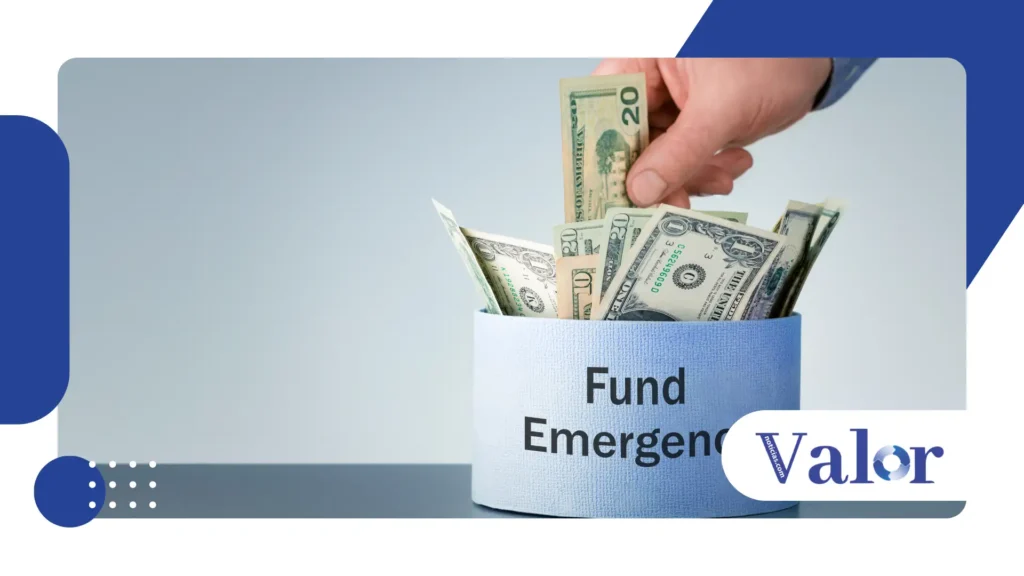
An effective store of value goes far beyond simply keeping money sitting idle in your traditional bank checking account.
It represents an asset protection tool designed to absorb severe financial shocks without destroying your current standard of living.
This refers to an amount allocated to very low-risk, highly liquid assets, ready for immediate redemption at any time.
When structuring a sustainable emergency fund, This allows you to create a strategic shield against unemployment, medical emergencies, and unexpected maintenance costs.
Its architecture should respect the balance between real profitability and ease of access, avoiding investments locked into long-term commitments.
There is something unsettling about how easily the market sells easy credit: without this prior protection, any unforeseen everyday event forces the use of credit cards or abusive loans.
The central focus is on preserving capital with returns exceeding the official inflation rate accumulated during the investment period.
Daily liquidity ensures that money is available exactly when unforeseen problems arise in your daily routine.
The sustainability of the method lies in consistently replenishing this fund without compromising essential monthly expenses.
Understanding the difference between an emergency fund and retirement investments is vital to the success of your planning.
Long-term investments aim for growth, while emergency funds focus exclusively on the rapid availability of accumulated money.
Therefore, clarity regarding the role of this reserve prevents unnecessary withdrawals for superfluous and impulsive daily consumption.
Why does financial sustainability matter in 2026?
The volatility of global markets and the constant transformations in the world of work demand greater financial resilience from Brazilian families.
Self-employed and salaried workers face dynamic economic scenarios that demand flexibility for rapid adaptation without significant income loss.
The Selic rate and the country's inflation indices require smart asset choices to protect your real purchasing power.
Ironically, the blind pursuit of security leads many to leave their money in savings accounts, losing purchasing power year after year to inflation.
The sustainability of your savings is directly linked to your habit of saving consistently and without excessive or unsustainable sacrifices.
Saving amounts of money that jeopardize the payment of basic bills often results in the premature abandonment of the capital accumulation strategy.
The secret lies in dividing your monthly contributions into smaller amounts, respecting your financial limits without compromising your family's well-being.
Furthermore, the emotional stability provided by a robust reserve prevents desperate financial decisions during times of severe crisis.
Professionals with financial security are able to plan their steps with greater analytical clarity and a medium- to long-term vision.
Sustainability also involves periodically reviewing the total accumulated value to adjust the final amount to the new operational costs of life.
Over the years, your fixed expenses change, and your savings should adjust proportionally to these variations.
How much should you save to ensure true security?
The general market rule recommends accumulating an amount equivalent to three to twelve months of your total daily fixed costs.
For salaried employees with greater job stability, six months of covered expenses usually offers a fairly comfortable safety margin.
Accurately calculating your monthly cost of living is the first step in defining your ultimate financial goal with mathematical clarity.
Include housing, food, health, transportation, and education in your calculations, temporarily cutting only the purely superfluous expenses from your daily budget.
Multiply that monthly amount by the number of months needed for your current professional profile and income stability.
Keeping this number in mind avoids setting unrealistic goals that generate frustration or lead to abandoning the savings journey altogether.
If the ultimate goal seems too far away now, break the overall goal down into smaller, achievable steps over the course of several months.
First, reach the milestone of one month of expenses paid and celebrate the progress before moving on to the next phase of the plan.
Consistency in contributions is considerably more important than the initial amount deposited in your first financial investments.
To fully understand the dynamics of interest rates in Brazil, consult the official guidelines on economics from the Central Bank of Brazil.
Adjusting your goals to the reality of your income prevents debt and ensures the continuous improvement of your family's financial health.
Where can I invest my daily liquid assets?
Choosing the right investment vehicle determines the efficiency and real security of your accumulated wealth over time.
The ideal asset needs to offer extremely low risk, fair returns, and immediate redemption without severe contractual penalties on the income.
To compose a sustainable emergency fund, The Selic Treasury bond emerges as one of the safest options in the entire national market.
Another widely used alternative is Certificates of Deposit, known as CDBs, with daily liquidity offered by established institutions.
Make sure the chosen CDB pays at least 100% of the CDI and has a guarantee from the Credit Guarantee Fund.
Avoid investment funds with high management fees that erode the profitability of your capital over time.
This is often misinterpreted, but real estate investment trusts (REITs) and stocks are completely unsuitable for this purpose due to the high daily volatility of their prices.
Volatility can force investors to withdraw their money during a downturn, resulting in permanent financial losses.
Savings accounts, although popular, offer lower returns and are less efficient than current fixed-income government bonds.
Diversifying the fund between two safe, liquid assets can increase operational efficiency on weekends and national holidays.
Keep a small fraction of the money in an interest-bearing digital account to cover immediate, very short-term daily emergencies.
Clarity in choosing financial products is the foundation for protecting your money from market fluctuations without losing real profitability.
How can you monitor the indicators that affect the profitability of your reserve?
Monitoring the evolution of economic indicators is essential to ensure that your assets remain protected against market fluctuations and increases in the cost of living.
When interest rates fluctuate, the return on fixed-income investments varies proportionally, requiring periodic attention to assess whether your strategy remains effective.
Understanding the behavior of the official inflation index allows you to adjust ongoing contributions and ensure that the reserve covers the real cost of your fixed expenses.
Consulting official data sources ensures an accurate reading of the macroeconomic scenario, avoiding hasty decisions based on rumors or short-term volatility.
To follow the updated reports on the trajectory of the IPCA and other fundamental economic indicators, access the official statistics page of [the relevant authority]. Brazilian Institute of Geography and Statistics (IBGE)
.
Analyzing this data quarterly strengthens your control over your family budget without requiring an excessive amount of time dedicated to monitoring the financial market.
With a clear view of the indicators, it becomes easier to determine the right time to adjust the total value of the reserve to maintain its complete security.
This consistent practice transforms financial management into a structured process, ensuring predictability and real protection for all your accumulated assets.
How to maintain discipline over the years?
Maintaining a healthy financial routine requires creating automated habits to avoid forgetting or being tempted to spend.
Schedule automatic transfers from your bank account immediately after you receive your salary or monthly income.
Track your monthly progress using organized spreadsheets or secure personal finance management apps.
Visualizing the continuous growth of your assets strengthens discipline and reduces impulses for superfluous and unnecessary purchases.
Avoid using your savings to finance trips, parties, or the purchase of consumer goods for strictly personal use.
If you need to use some of the funds for a genuine emergency, establish an immediate plan to replenish the used balance.
Rebuilding the budget should be the absolute priority of your financial plan until the original goal is met again.
Openly discussing financial goals with family ensures everyone's support in sticking to the established household budget.
Family alignment reduces unnecessary expenses and transforms fund building into a collective project focused on daily stability.
Celebrating milestones strengthens a long-term mindset and keeps motivation high throughout the building process.
Financial discipline is a skill cultivated daily through conscious choices aligned with your true life goals.
++ Money or time? How to balance your financial priorities.
Comparison of Options for Reserve Allocation
Choosing the right financial product requires a careful analysis of the operational characteristics of each asset available in the Brazilian market.
Below, we present the actual data for the main types of fixed-income investments used to build personal safety reserves.
++ How to use Pix for smart financial strategies
| Investment Modality | Typical Average Yield | Risk Level | Asset Liquidity | Main Protection |
| Selic Treasury | 100% of the Selic Rate | Extremely Low | D+1 (Useful) | National Treasury |
| Daily Liquidity CDB | 100% to 102% of the CDI | Low | Immediate / D+0 | FGC (Up to R$ 250 thousand) |
| Traditional Savings | TR + 0.5% per month | Low | Immediate | FGC (Up to R$ 250 thousand) |
| Simple Fixed Income Fund | 98% to 100% of the CDI | Low to Medium | D+0 or D+1 | No FGC guarantee. |
Practical tips to optimize your monthly savings.
Small adjustments to your household routine can free up immediate financial leeway to accelerate the building of your daily emergency fund.
Review all recurring service subscriptions and cancel those that are not frequently used by your family each month.
Negotiate bank fees and credit card annual fees to reduce unnecessary operational costs in your daily financial budget.
Redirecting extraordinary revenues, such as income tax refunds and the thirteenth salary, accelerates the achievement of the established goal.
The focus on consistent investments consolidates the growth of your company. sustainable emergency fund without compromising your daily quality of life.
Avoid accumulating short-term debt while building your savings by prioritizing paying off high-interest debts before saving.
Eliminating compound interest charged by the market is the smartest first step to freeing up your monthly cash flow.
Maintaining consistency is the cornerstone that distinguishes successful investors from those who give up halfway through their wealth-building journey.
With each completed step, the feeling of financial security strengthens, allowing for much bolder and more planned professional and personal decisions.
Your future stability depends directly on the choices you make in the present with your money and your budget.
Continuously studying financial education expands your market perspective and improves the efficiency of managing your personal finances.
To deepen your knowledge about consumer protection and financial rights, access the materials on your state's Procon portal.
++ How to Avoid the Fashion Investor Trap
How can you protect the purchasing power of your savings against inflation?
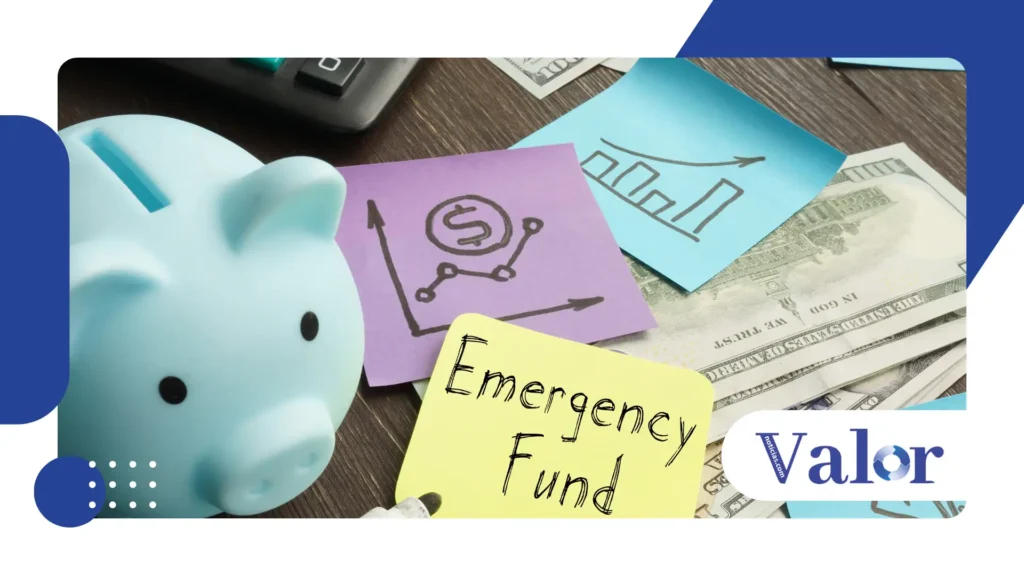
Ensuring your money retains its true value over the years requires choosing investments that outperform price fluctuations without exposing your capital to unnecessary risks.
Instead of leaving your resources idle or subject to invisible losses, allocating your savings to post-fixed rate bonds is the safest way to preserve your financial capacity in the long term.
Inflation acts as an invisible rate that eats away at the value of idle money, gradually reducing its real purchasing power each month.
When the prices of essential items rise, an amount without adequate returns loses effectiveness, turning a theoretically secure protection into an insufficient balance.
Therefore, allocating capital to assets linked to the basic interest rate or inflation indices ensures that your protection margin remains aligned with reality.
The main goal here is not to seek extraordinary gains or speculate in the market, but rather to protect your purchasing power against severe economic fluctuations.
By keeping your savings updated to reflect the real cost of living, you ensure that every real saved continues to serve its original purpose during times of crisis.
To follow macroeconomic indicators in real time and monitor price trends in the country, consult the economic analyses of [source name/source]. Brazilian Institute of Geography and Statistics (IBGE)
Frequently Asked Questions (FAQ)
Can I use my emergency fund to invest in opportunities?
No, the reserve is exclusively for covering unforeseen events and real emergencies. Using this money for market opportunities exposes your capital to unnecessary risks, distorting the fund's primary security function.
What is the difference between daily liquidity and liquidity at maturity?
Daily liquidity allows you to withdraw your money on any business day with proportional returns. Liquidity at maturity requires the investor to keep the funds invested until the agreed-upon end date to avoid losing profitability.
Should I invest in Treasury Selic bonds or in daily liquidity CDBs?
Both options are excellent for savings. The Selic Treasury bond has the lowest credit risk in the country, while CDBs from large banks that pay 100% of the CDI offer the convenience of immediate redemption through your bank's app.
How long does it take to build a full reserve?
The time frame varies depending on your monthly contribution capacity and the size of your target goal. The important thing is to maintain consistency in your daily or monthly deposits, even if the amounts are modest at the beginning of your journey.
Is saving still a good option for emergencies?
Savings accounts offer immediate liquidity, but deliver lower returns than other safe fixed-income assets. Investments such as daily liquidity CDBs or Treasury Selic bonds better protect your purchasing power against inflation.
Should I keep the reservation in the same account I use to pay my daily bills?
Ideally, the fund should be kept in a separate account to avoid accidentally using the balance for everyday purchases. This physical separation of money strengthens financial discipline and prevents unplanned withdrawals in daily life.
Creating and maintaining your financial reserves represents the first major step towards achieving true financial independence.
With planning, consistent discipline, and the right asset choices, you can ensure the peace of mind needed to build a prosperous and secure future.
