
Credit via digital wallet is gaining ground among young consumers.
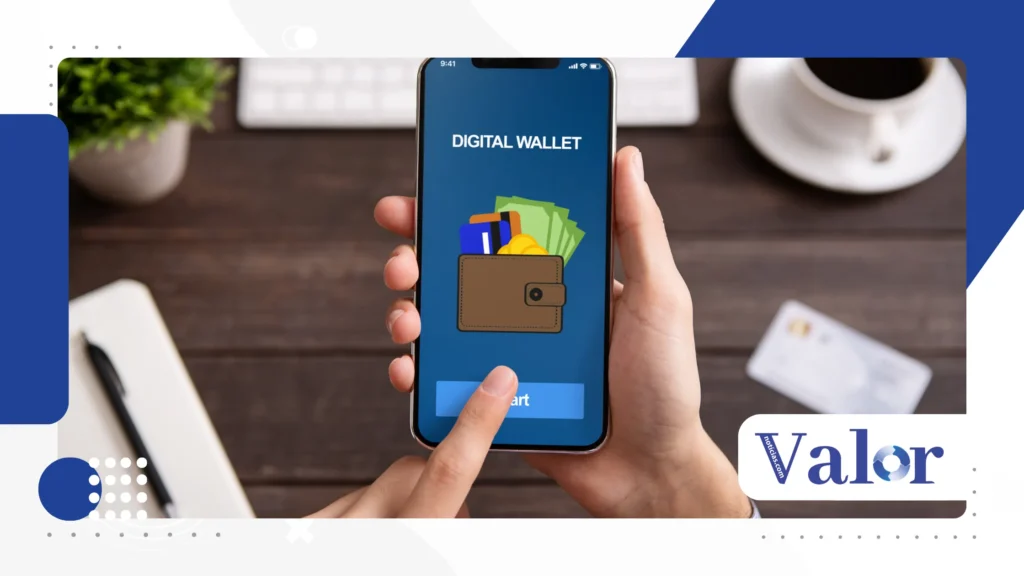
The Brazilian financial market is undergoing a silent but profound metamorphosis. Credit via digital wallet It has gone from being a peripheral alternative to becoming the epicenter of financial inclusion for a generation that doesn't even consider entering a physical branch in 2026.
Advertisements
This shift to digital is not just a generational whim; it's a direct response to the obsolescence of traditional credit models.
While traditional banks are still mired in analog bureaucracies, capital flows through intuitive interfaces, shaping a new consumer behavior that prioritizes immediate autonomy.
The following analysis dissects the workings of this phenomenon, exploring how technology has reshaped financial trust. Understand the risks, the analytical mechanisms, and what truly sustains this structure in 2026.
Summary
- The driving force behind digital adoption.
- The death of traditional credit scoring and the new tracking.
- Real advantages for the connected consumer
- Metrics: The credit landscape in 2026
- The trap of easy access
- The landscape of transactions in Brazil
- FAQ – Necessary Clarifications
What motivates younger generations to adopt digital credit?
There is something telling about the speed with which young people have abandoned the conventional banking system.
For those who were born with a smartphone in their hand, the idea of waiting for a manual review seems like an irritating anachronism, almost an insult to the fast pace of modern life.
Fintechs have filled this vacuum with surgical precision, transforming the act of taking out credit into an extension of the social experience.
Access to Credit via digital wallet It happens organically, often integrated into everyday purchases, eliminating the psychological burden that existed when applying for a formal loan.
By 2026, the perception of value has changed dramatically. Young consumers are no longer just looking for money; they are looking for a platform that understands their dynamic lifestyle and offers limits that make sense for their immediate reality.
How does the credit analysis system work on these platforms?
The concept of a "clean record" has been replaced by artificial intelligence algorithms that see far beyond a simple list of restrictions.
Today, your digital footprint — from streaming payments to how often you use Pix (Brazil's instant payment system) — says more about your financial health than any bank manager could.
These portfolios operate by cross-referencing massive amounts of data, interpreting behavioral patterns to predict defaults before they even occur.
It is a silent surveillance, but one that allows the granting of Credit via digital wallet for profiles that would be summarily dismissed by traditional banks.
The security of this ecosystem is what keeps the wheels turning. Advanced encryption protocols ensure that this invasive, yet necessary, analysis occurs within strict ethical and regulatory boundaries.
+ Embedded lending is gaining ground in Brazilian e-commerce by 2026.
What are the main advantages for the modern consumer?
Instant liquidity is undoubtedly the greatest advantage of these tools. In a world where business and consumer opportunities arise in seconds, having capital available at the same pace is what defines who can seize the moment.
In addition to agility, the cost structure of these platforms is noticeably leaner. Without the dead weight of maintaining physical branches and gigantic staff, digital wallets can offer rates that, while not symbolic, are much more palatable.
The strategic use of Credit via digital wallet It also serves as a practical management exercise. The 2026 apps offer predictive visualizations that show the impact of an installment on the budget for the following months, something that a regular bank statement has never been able to do.
+ More selective credit reduces approvals for consumers.
Comparative table: Credit Options in 2026
| Indicator | Digital Credit (Fintechs) | Traditional Banks | Microcredit |
| Response Time | Snapshot | 2 to 5 days | Up to 15 days |
| Analysis Basis | Digital Behavior | Formal Income | Social Bond |
| Access | Mobile First | Hybrid | In person |
| Average Rate | 2.8% at 5.5% am | 4.2% at 9.0% am | 1.8% at 3.2% am |
| Predominant Profile | Generation Z / Freelancers | Corporate | MEI / Low Income |
What are the risks of early debt in this scenario?

Excessive ease is a double-edged sword that is often misinterpreted by the most optimistic.
Where credit is easily accessible, there's also an open door to over-indebtedness even before full financial maturity.
The truth is that the speed of technological advancement has overtaken basic financial education.
Today we have young people mastering complex investment interfaces, but who still don't understand the devastating effect of compound interest when... Credit via digital wallet It's used as if it were extra income.
The danger lies in the fragmentation of debt. It's easy to lose track of how much you owe when the credit limit is spread across four or five different apps, each with a distinct due date.
How is the sector adapting to the new regulations?
The market is no longer a digital "lawless land." By 2026, institutions will be required to implement security safeguards that prevent rampant consumer spending when they detect signs of financial vulnerability in users.
This stance is not just ethical, it's about survival. An insolvent customer base destroys the viability of any fintech company, no matter how modern it is. Therefore, transparency in the Total Effective Cost (TEC) has become the gold standard in the sector.
The consolidation of Credit via digital wallet It even forced the "dinosaur" banks to reinvent themselves. The result is a more competitive environment where the consumer, theoretically, has the power of choice, provided they know how to read between the lines of digital contracts.
+ Biometric lending is making its way into the financial system.
Final Reflection
Mobile credit is the engine of a new social dynamic in Brazil. It has broken down barriers that seemed insurmountable for those who didn't have a payslip, but it has brought with it the responsibility of much more rigorous and conscious management.
We're not just talking about a financial tool, but a new contract of trust between the individual and the code.
Those who know how to navigate these waters without being swept away by the current of impulsive consumption will find a powerful ally for personal growth.
For a broader view of how these fintech trends are reshaping the global economy, it's worth following the analyses of... World Economic Forum, which monitors the impacts of large-scale digitization.
FAQ – Frequently Asked Questions
1. Is it really safe to apply for credit through an app?
Yes, current security is robust. Authorized platforms use facial recognition and banking security standards, making the process more secure against fraud than many physical methods.
2. Does digital credit help build a financial history?
Absolutely. Paying on time through these platforms contributes to your Positive Credit History, which facilitates access to larger loans, such as for real estate or vehicles, in the future.
3. Is there an age limit for obtaining credit via digital wallet?
The legal minimum age is 18. However, many wallets offer accounts for minors with limits controlled by parents, precisely to promote early financial education.
4. Why do the rates vary so much between apps?
Each company has its own risk model. If the algorithm determines that you have a more cautious profile, it will offer lower rates to encourage your loyalty.
5. What should I prioritize before accepting a limit?
Always look at the final installment amount and the monthly interest rate. The secret is to never commit more than 20% of your monthly income to loan payments, regardless of how easy it is to get approved.
