
What are Incentivized Debentures and Why Are They Getting Attention?
Incentivized debentures have emerged as one of the most attractive options in the world of fixed-income investments in Brazil.
Advertisements
In a scenario of high interest rates and the search for alternatives that combine security, profitability, and tax benefits, these debt securities issued by companies to finance infrastructure projects are being acquired by investors of different profiles.
But what makes incentivized debentures so special?
With the increase in issuance registrations and recent regulatory changes, incentivized debentures are not just a financial tool.
But also an engine for the country's development.
++ Real Estate as a Store of Value: What Does It Mean?
Let's dive into this topic, with a clear and strategic approach, to understand why these securities are evolving the Brazilian capital market.
What are Incentivized Debentures?
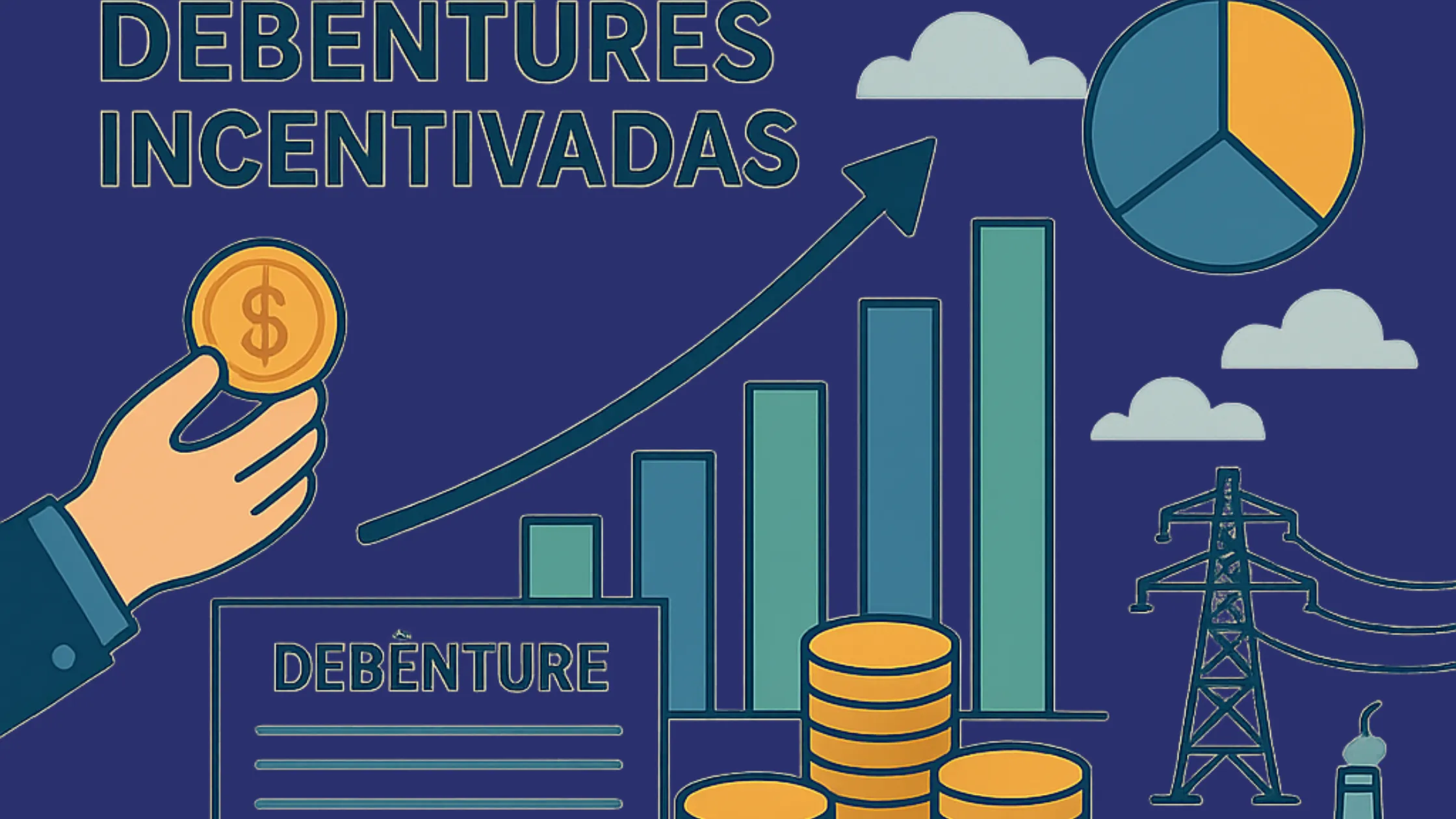
To begin with, incentivized debentures are debt securities issued by companies.
In this sense, generally joint stock companies, with the objective of raising funds for infrastructure projects considered a priority by the Brazilian government.
Unlike common debentures, these bonds have a powerful tax incentive.
Income Tax (IR) exemption for individuals and tax reduction for issuing companies, as stipulated by Law 12,431/2011.
This feature makes it a bridge between investors seeking net profitability and companies analyzing financing for large-scale projects.
For example, such as highways, power plants or sanitation systems.
Let's imagine incentivized debentures as a well-paved highway in a congested city.
Thus, while other investments face the tax bottleneck, these bonds offer a freer path, with more attractive returns.
The energy, transportation, telecommunications and basic sanitation sectors are the main beneficiaries.
Because the resources raised are directed towards projects that drive Brazil's economic and social development.
For example, a renewable energy company might issue incentivized bonds to build a solar plant, benefiting both the local community and the investors financing the project.
Furthermore, incentivized debentures are regulated by bodies such as the Securities and Exchange Commission (CVM) and the Ministry of Regional Development (MDR), ensuring a level of legal certainty.
However, it is crucial to understand that these securities do not have the protection of the Credit Guarantee Fund (FGC), which requires the investor to carefully analyze the solidity of the issuing company.
In 2024, incentivized debenture issuances reached a historic record of R$132 billion.
Thus, exceeding the 2023 volume by more than 100%, according to data from the Civil House, demonstrating the exponential growth of this market.
Why are Incentivized Debentures on the Rise?

Firstly, the exemption from Income Tax for individuals is one of the biggest attractions of incentivized debentures.
In a context of rising Selic rates, which reached 13.75% in 2025, investors are looking for alternatives that maximize net profitability.
++ How to be more generous without compromising your budget
Since income tax can significantly reduce gains on other fixed-income investments, such as CDBs or common debentures, the tax exemption for incentive-based investments offers a competitive advantage.
This means that all of the bond's income goes directly into the investor's pocket, without tax deductions.
Furthermore, another factor that explains the growing popularity is the diversification that these titles promise.
Unlike investments tied to the banking sector, such as LCIs and LCAs, incentivized debentures allow exposure to various sectors, such as infrastructure and energy.
For example, an investor may purchase debentures issued by a highway expedition.
For example, like the fictitious “Via Progresso SA”, which uses the resources to modernize a road essential for the flow of agricultural products.
This type of investment not only diversifies the portfolio, but also contributes to regional development, creating a positive social impact.
Finally, recent regulatory changes, such as restrictions imposed by the National Monetary Council (CMN) and other exempt investments, such as CRIs and CRAs, have drawn even more attention to incentivized debentures.
These restrictions reduced the offer of income tax-exempt alternatives.
Thus, increasing the demand for debentures and causing issuing companies to offer attractive rates.
The combination of tax benefits, sector diversification, and a more liquid secondary market in 2025 makes these bonds a strategic choice for investors seeking a balance between safety and return.
Advantages and Benefits
First of all, the authorized inspector is the star of incentivized debentures.
To illustrate, consider the case of Ana, an investor who invests R$ 50,000 in an incentivized debenture with a return of IPCA + 6% per year.
++ How to Avoid Impulsive Consumption Traps and Save More
In five years, with an average inflation of 4%, she would get a gross return of about R$ 20,000.
In a CDB with the same profitability, the IR of 15% would reduce this gain to approximately R$ 17,000.
With an incentivized debenture, Ana maintains the full R$ 20,000, a significant difference that boosts the growth of her assets.
Furthermore, incentivized debentures offer varying terms, generally from medium to long term (four to 20 years), allowing investors to align their financial objectives with the bonds' maturities.
This flexibility is ideal for those planning long-term goals, such as retirement or purchasing real estate.
Incentivized debenture funds, such as the fictitious “InfraBrasil FIC,” also democratize access.
Thus, requiring smaller initial transports (from R$ 100, in some cases) and offering diversification in different sectors and companies, avoiding credit risk.
On the other hand, the contribution to the country's development is an intangible but equally relevant benefit.
By investing in incentivized debentures, you finance projects that improve quality of life, such as the construction of basic sanitation systems in underserved communities.
This social impact adds value to the investment experience, aligning financial return with purpose.
However, it is essential to choose issuers with a good risk rating (AAA or A rating) to minimize the possibility of default.
Risks and Precautions When Investing in Incentivized Debentures
Although incentivized debentures are defined as fixed income, they are not risk-free.
The main one is credit risk, that is, the possibility that an issuing company will not honor its financial commitments.
Since these securities are not protected by the FGC, the bankruptcy of a company can result in significant losses for the investor.
Therefore, it is essential to evaluate the issuer's rating, provided by agencies such as Fitch or S&P, and prioritize companies with a history of financial strength.
Another point of attention is liquidity.
Although the secondary market for incentivized debentures will be more liquid in 2025.
Selling these securities before maturity may result in losses, especially in scenarios of high interest rate volatility.
For example, if the Selic rate rises abruptly, the market value of debentures may fall, impacting those who need early redemption.
Therefore, these securities are more suitable for investors with a long-term horizon and who do not depend on immediate liquidity.
Finally, analysis of the funded project is crucial.
Not every infrastructure project is equally secure.
A project in a region with regulatory instability, for example, may face delays or cancellations, affecting the company's ability to pay bondholders.
Before investing, ask yourself: How well do you know the company and the project behind the title?
Consulting public offering reports at the CVM and seeking guidance from financial advisors can help you make more informed decisions.
How to Invest in Incentivized Debentures?
Investing in incentivized debentures is more accessible than many imagine.
The first option is to acquire the securities directly on the primary market, through public offerings distributed by brokers or banks.
These offerings are advertised on platforms such as B3 and prevent investors from analyzing the issuance prospectus, which details the project, profitability, and risks.
For investors with less capital, incentivized debenture funds are an alternative practice.
In other words, they allow diversification with smaller transports and have specialized managers.
Additionally, it is important to monitor the investment to your risk profile and financial goals.
For example, a fund like “Sparta Debêntures Incentivadas” offers profitability linked to the CDI and a portfolio distributed across sectors such as energy and sanitation.
Therefore, ideal for those seeking stability.
The direct purchase of debentures, as issued by “Energia Limpa SA” to finance a wind farm, may be more suitable for experienced investors who invest in analyzing specific projects.
In both cases, diversification is key to mitigating risk.
Finally, monitoring is continuous.
Market conditions, such as variations in the Selic rate or regulatory changes, may impact the performance of debentures.
Tools like Anbima's Pricing Report help monitor securities' profitability and liquidity.
Working with a reliable broker, such as XP or Daycoval, also makes it easier to access up-to-date information and personalized recommendations.
Frequently Asked Questions about
| Question | Response |
|---|---|
| What differentiates incentivized debentures from common debentures? | Incentivized debentures are exempt from income tax for individuals and are intended for priority infrastructure projects, while common debentures are taxed and can finance any type of project. |
| Which services can issue incentivized debentures? | Sectors such as energy, transportation, basic sanitation, telecommunications, health and education, as long as the projects are approved by the government. |
| What is the risk of investing in incentivized debentures? | The main risk is credit risk (issuer default) and lack of FGC coverage. Liquidity in the secondary market may also be limited. |
| What is the minimum amount to invest? | It depends on the supply. In the primary market, the minimum can be R$ 1,000, while incentivized debenture funds accept contributions starting at R$ 100. |
| How do you know if a debenture is incentivized? | Check the public offering documentation with the CVM or on the issuing company's Investor Relations website. |
Why Are Incentivized Debentures Worth It in 2025?
First, the 2025 macroeconomic scenario favors fixed-income investments, especially those with tax authorization.
With the Selic rate at high levels and persistent inflation, incentivized debentures offer a unique combination of inflation protection (many are linked to the IPCA) and superior net profitability.
Funds like “AZ Quest Debêntures Incentivadas” delivered returns of 8,01% in 2024, outperforming taxed alternatives.
Furthermore, the social impact of incentivized debentures cannot be underestimated.
By financing projects such as renewable energy plants or sanitation systems.
The investor contributes to reducing Brazil's infrastructure deficit, estimated at R$244 billion annually by Abdib.
This alignment between financial return and positive impact creates a compelling narrative for investors who value ESG (Environmental, Social and Governance).
Finally, the evolution of the secondary market, which became more liquid in 2025, reduces the risks associated with the early sale of securities.
With professional managers monitoring issuances and the possibility of hedging against market fluctuations, incentivized debentures are a powerful tool for those seeking diversification, security, and consistent returns.
In a world of economic uncertainty, these bonds are like a reliable compass, guiding investors toward solid, proven opportunities for Brazil's future.
