
Economic macrotrends that will impact businesses in the coming years
Economic macrotrends that will impact businesses in the coming years!
Advertisements
Have you ever wondered what invisible forces shape global business?
Advanced technology and economic complexity make understanding new trends crucial.
This helps a lot in business strategies.
In 2012, the World Economic Forum and Deloitte conducted an important study.
They talked about the trends that will change manufacturing in the next 20 years.
These changes affect not only the economy, but also how we live, work and consume.
The most important trends include the globalization, technological innovations and the demand for sustainability.
Knowing about these forces can make the difference between success and struggling to stay relevant.

Main Conclusions
- THE globalization is associated with the growth of the middle class and the improvement of the quality of life in developing countries.
- Competition for foreign direct investment (FDI) is expected to increase, providing more options for investors.
- The scarcity of natural resources will raise the prices of rare materials in the short term and encourage research into alternatives.
- Technological innovations quick solutions will be essential for the success of companies and countries, requiring collaborations with academia.
- Human capital will be crucial, requiring a focus on attracting, developing, and retaining talent.
Globalization and Expansion of Manufacturing
THE globalization drives the manufacturing expansion nowadays.
More than 60% of the world's population uses the internet, about 5 billion people.
This opens the door to global trade and distributed production.
It improves people's lives and increases the middle class, especially in developing countries.
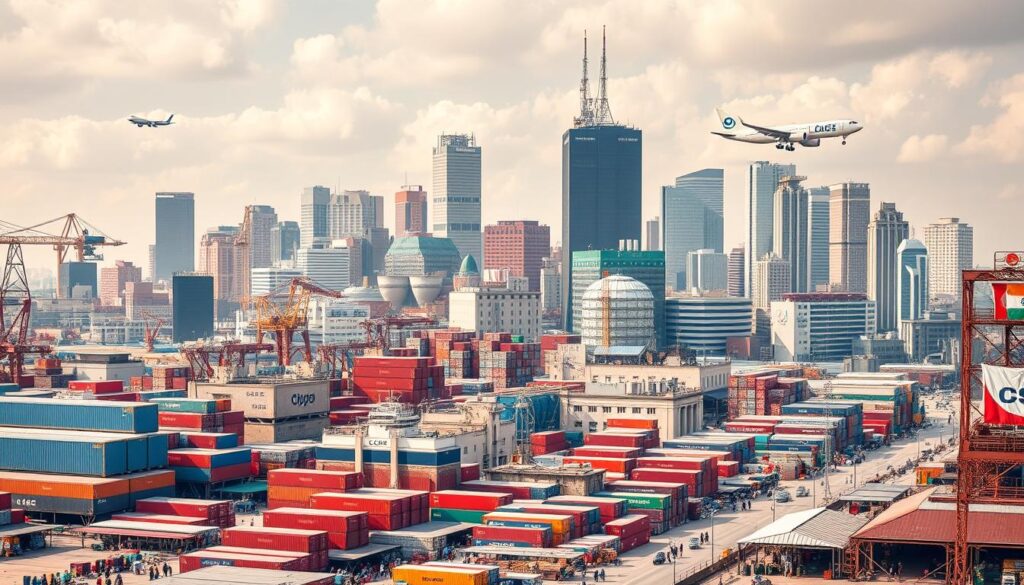
However, facing challenges is necessary. Exchange rate volatility and protectionist policies are major obstacles.
Adapting to global changes is essential, considering local infrastructure and competition for investment.
Price volatility in the energy market, worsened by the pandemic, is affecting producers' profits. This creates a complex economic environment.
Companies across various sectors must adapt to the global economy.
By 2025, China and India will produce about 40% of the world's cars.
America and Europe will also play an important role in production.
This shows the growth of manufacturing expansion.
It is linked to global demands and technological advances.
One strategic planning who sees the opportunities and challenges of globalization is crucial.
Companies that innovate and adapt quickly will succeed.
They will secure their place in the competitive and interconnected market.
++ 2025 Economic Scenario: What to Expect for Brazil and the World
Technological Innovations and Industry 4.0
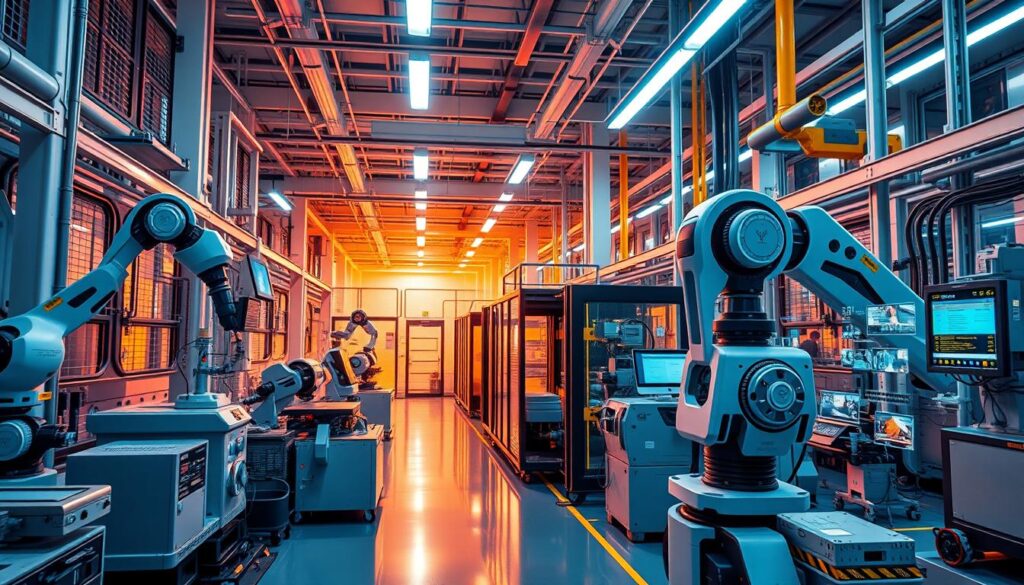
THE Industry 4.0 unites digital technologies with production.
It responds to modern society's need for connectivity.
To the technological innovations are essential to transform production and seek efficiency.
Brazil is the 9th largest economy in the world, but is ranked 85th in the Global Innovation Index.
Currently, only 1.7% of Brazilian companies operate with the Industry 4.0.
However, 21.8% of large and medium-sized companies plan to digitalize their production processes in the next ten years.
The program More Productive Brazil showed important advances.
Productivity increased by more than 52% and production time decreased significantly.
With SENAI's support, 100,000 companies are expected to benefit from this program over the next four years.
This shows the importance of qualifying human capital and adapting to new technologies.
A study called Macrotrends for the Future of Industry 2040 analyzed 14 global trends.
It involved 21 states and 261 industries.
It focused on 10 industrial sectors, including Machinery and Equipment and Metallurgy, which employ hundreds of thousands of people and generate billions of reais.
Table:
| Sector | Companies | Jobs | Annual Production (R$) | Collection (R$) | Exports (US$) | Industrialization Index |
|---|---|---|---|---|---|---|
| Machinery and Equipment | 48 thousand | 695 thousand | 339 billion | 31.3 billion | 11.7 billion | 41% |
| Metallurgy | 50 thousand | 737 thousand | 204 billion | 28 billion | 27 billion | 33% |
To achieve these goals, migration to Industry 4.0 is crucial.
Technologies such as Big Data, robotics, and IoT improve the integration between humans and machines.
Artificial intelligence and IoT are essential to optimize resources and manage them sustainably.
This could reduce annual industrial costs by at least R$ 73 billion.
To the technological innovations also drive the open innovation. They allow companies to share knowledge.
Adapting university curricula, especially in the Amazon, is essential for training professionals in the bioeconomy. This meets the demands of Industry 4.0.
Projects like Amazon 4.0 and the Rainforest Social Business School show how sustainability and social inclusion can be integrated into economic development with new technologies.
Economic Macrotrends in Sustainability
The world is changing fast, and sustainability is more important than ever.
With 8 billion people, we need greener practices. Governments and businesses are realizing the importance of green economy.
Brazil has a big role to play in this change.
With 15% of global potential to reduce carbon, it is essential.
The market of sustainability could reach US$1.25 billion, bringing benefits to everyone.
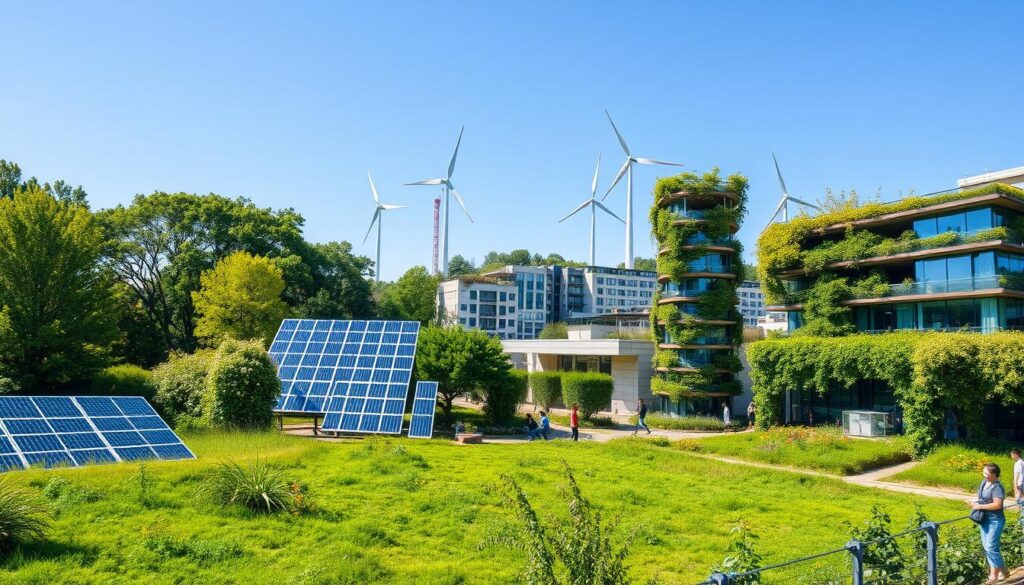
It's time to innovate in energy efficiency and ecological responsibility.
With aluminum and copper prices rising to 70%, we need sustainable practices.
Global economic losses from climate could reach US$1.4 trillion by 2040.
Therefore, the clean energy is so important. Companies must invest in innovative technologies to thrive.
| Macrotrends | Impacts |
|---|---|
| Sustainability | Urgent need for green practices |
| Green Economy | Market projection above US$1.25 billion |
| Clean Energy | Reducing global economic losses |
++ Zero-Based Budgeting: What It Is, Benefits, and How to Apply It
Transformations in the Workforce and Education
The changes in workforce and in modern education reflect adaptation to new realities.
The Future of Jobs Report 2025 shows that by 2030, 78 million new job opportunities will emerge.
This will result in significant growth in the job market.
However, the need for professional training becomes more evident as 40% of the skills required in the job are expected to change during this period.
A survey of 803 companies, employing more than 11.3 million workers, revealed that 59 out of every 100 workers will need retraining by 2030.
On the other hand, 77% of employers plan improve skills of workers in response to technological changes.
THE modern education must become more accessible and personalized.
It must prepare professionals for a market in constant transformation.
Companies that invest in talent development and retention will have a competitive advantage.
The skills expected to grow the most through 2030 include: networking and cybersecurity, creativity, resilience, flexibility and agility, leadership and social influence, and analytical thinking.
“The skills gap is cited by 631 employers as the main barrier to business transformation, indicating the growing importance of professional training and continuing education.”
Additionally, the most significant growth is in roles such as nursing professionals and high school teachers.
This is due to demographic trends. More than 751% of companies plan to adopt technologies such as big data, cloud computing, and AI in the next five years.
The education sector is also expected to grow by approximately 10%, resulting in 3 million additional jobs.
Economic Macrotrends: Table
| Aspects | Statistics |
|---|---|
| Jobs Displaced by 2030 | 92 million |
| Jobs Created by 2030 | 170 million |
| Workers in need of retraining | 59 out of 100 |
| Employers planning to improve skills | 77% |
| Employers planning to cut back workforce due to automation | 41% |
| Job growth in education | 3 million |
| Priority Skills | Networking and cybersecurity, creativity, resilience, flexibility and agility, leadership and social influence, analytical thinking |
In short, the transformations in workforce and in modern education are inevitable.
They demand a proactive approach to adapt to new requirements.
Companies and workers who invest in constant professional training will be better positioned to meet future challenges and seize new opportunities for growth and innovation.
Economic Macrotrends: Conclusion
Understand the economic trends is crucial for leaders.
They need to create business strategies effective.
This article has shown the main factors that will change the global economy in the coming years.
Adapting and innovating are essential for companies to thrive.
They need to adapt quickly to not only survive but grow in a rapidly changing economic world.
THE globalization and the technological innovations have a great business impact.
By 2027, large companies will invest more than 25% of their budget in Artificial Intelligence (AI).
This shows the importance of planning the use of new technologies well.
Taking a proactive approach to current trends is essential.
This way, companies can maintain their competitive advantage in the market.
Sustainability and changes in workforce are also important.
By 2026, many companies will use technology to improve processes and efficiency.
This could generate millions of new jobs in Latin America, with Brazil being a major contributor.
In short, these trends create both opportunities and challenges.
Well-prepared companies can successfully face these changes.
Staying up to date and engaged with these trends is crucial for the future of business.
++ How can I increase my company's revenue? Tips that can save your business
