
Productivity in Brazil hinders sustainable economic growth.
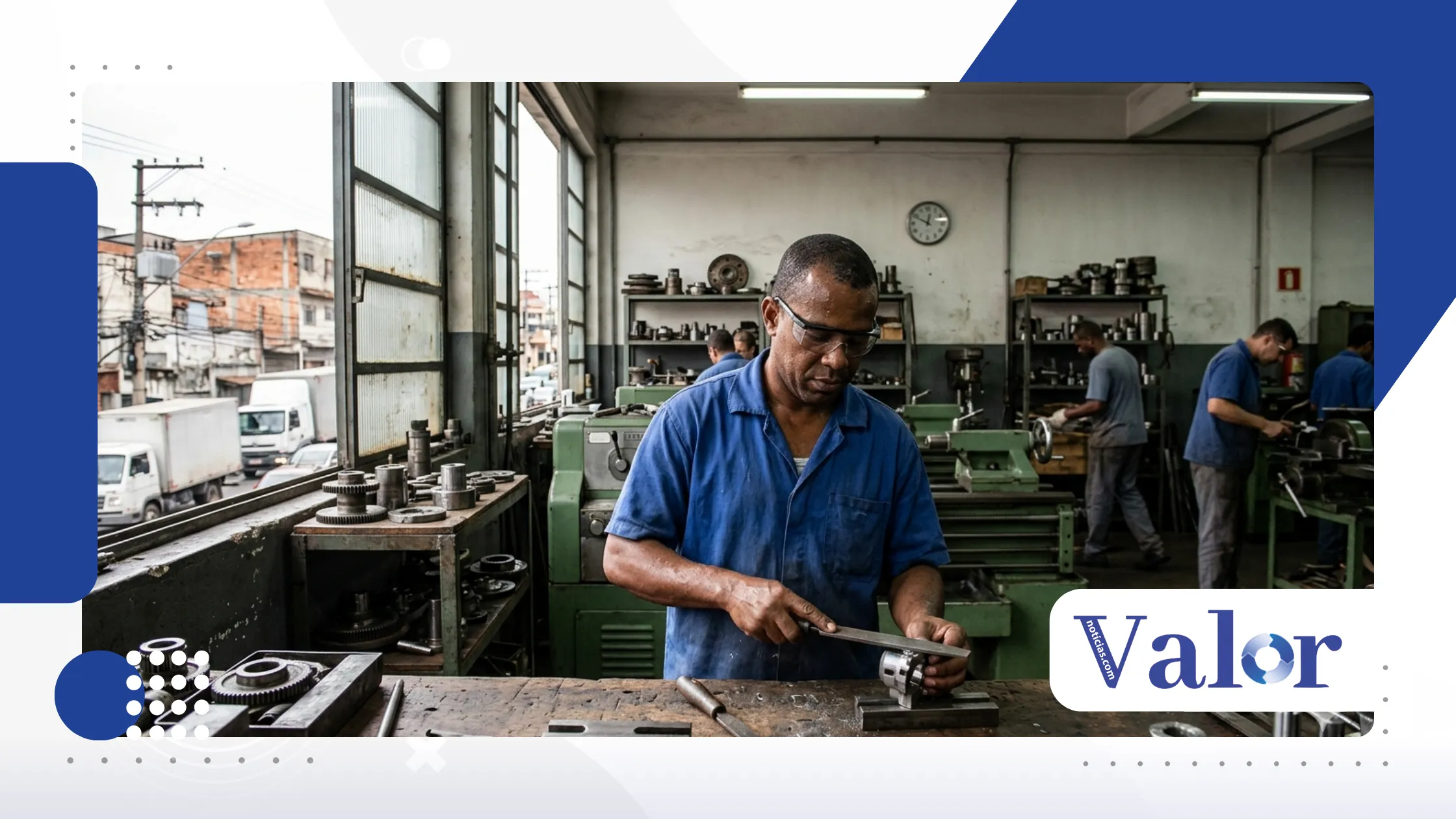
Low productivity in Brazil Today, it represents the biggest structural bottleneck for GDP growth, preventing the country from reaching a truly sustainable level of social and economic development.
Advertisements
While neighboring and emerging Asian economies have made qualitative leaps in the last decade, the Brazilian scenario seems stuck in a rearview mirror.
The problem is not just a lack of momentum, but a legacy of poor infrastructure and a bureaucracy that acts as an invisible anchor.
In this article, we analyze the causes of this paralysis, the real impact on the cost of living, and which reforms have only been implemented in theory but need to be prioritized to reverse this systemic inefficiency.
Summary
- The jammed gears of the business environment
- The gap between diplomas and competence.
- Logistics: the cost of crossing one's own country.
- Where are we on the global efficiency map?
- The way out through investment in real value.
- Quick answers about the economic outlook.
What are the real causes of low productivity in Brazil?
The debate about productivity in Brazil It is common to fall into the trap of blaming only the worker at the front line, but the truth is that inefficiency is, first and foremost, managerial and institutional.
The tangled Brazilian tax system, even with recent advances in simplifying consumption, still requires companies to maintain veritable armies of accounting departments just to exist legally, draining creative energy.
There is something unsettling about how legal uncertainty drives away long-term capital, the kind that builds factories and research centers, favoring volatile money that flees at the slightest sign of instability.
The lack of strategic trade openness also protects inefficient sectors, creating an artificial comfort zone where innovation is seen as a cost, not a means of survival, thus stifling the growth of national industry.
In addition to this, prohibitive credit availability in the domestic market stifles small business owners, who spend more time trying to balance cash flow than optimizing their production processes or investing in machinery.
How does the educational gap impact the national economy?
Human capital development is the foundation upon which... productivity in Brazil It should rise, but the mismatch between what is taught and what the market demands is a growing chasm.
Workers with basic training gaps face natural difficulties in operating new technologies, which generates a vicious cycle of low value delivered per hour worked in virtually all sectors.
The lack of technical education that engages with industrial realities prevents young people from entering the job market autonomously, forcing the private sector to assume a role of functional literacy that is not its responsibility.
It is illusory to expect sustainable growth without addressing this educational myopia, which ignores the digital skills needed to lead the technological revolution that is already changing the global employment landscape.
Why is infrastructure still the main logistical bottleneck?
Moving cargo across the country is an exercise in patience and losses, impacting the competitiveness of our exports and directly and cruelly increasing the cost of food for Brazilians.
The almost religious dependence on road transport, coupled with the questionable maintenance of many roads, creates a trail of wasted fuel and time that no efficiency spreadsheet can absorb without passing it on to the final price.
Ports operating on the edge of bureaucracy and high airport fees complete the picture of isolation, making the flow of production a logistical challenge that seems to come from another century.
Although the concession model has progressed, the pace of expansion of railways and waterways is still not enough to balance the transport matrix, which remains unbalanced and expensive for producers.
A modern infrastructure is not a luxury, but the essential physical support for... productivity in Brazil Finally, let it stop being just a campaign promise and transform into real economic results.
What is the impact of the tax burden on business efficiency?
The tax burden is only part of the problem; the real trap lies in the cumulative effect and distortions that punish those who try to add value to the product, ironically benefiting the export of basic goods.
Companies lose competitive edge by carrying hidden costs that simply don't exist in competing markets, which discourages technological sophistication and the creation of Brazilian products with a global brand.
Tax reform is a breath of fresh air, but heavy payroll taxes remain an obstacle to formalizing high-performing talent in the country.
Without a fiscal environment that is at least predictable, Brazilian managers are forced to become experts in tax survival, leaving them little time to think about innovation or process improvement.
++ Logistics costs in Brazil are rising and impacting final prices.
Productivity Comparison: Brazil vs. World (Data 2025-2026)
The figures below reveal the gap that separates Brazil's efforts from the efficiency of economies that have prioritized technology and high-level technical education in recent years.
++ Restricted credit in 2026 changes household consumption behavior.
| Country | Productivity per Hour (USD) | Annual Growth (Average) |
| United States | $78.50 | 1.8% |
| South Korea | $52.10 | 2.5% |
| Chile | $31.20 | 1.2% |
| Brazil | $18.90 | 0.4% |
| India | $12.40 | 3.8% |
How can technological innovation save GDP growth?

Artificial intelligence and automation are no longer fiction, but survival tools that the country needs to embrace if it wants to avoid total economic irrelevance in the coming cycles.
The Brazilian startup ecosystem is resilient and creative, but the lack of solid bridges between academic research and practical application in factories hinders the scaling potential of these innovations.
Investment in R&D is still excessively dependent on the state, while in leading economies it is the private sector that takes the risk in pursuit of real gains in operational efficiency.
Digitizing small producers and micro-enterprises is an urgent mission, since this group sustains the majority of formal jobs, but still operates with obsolete tools and processes.
To raise the productivity in BrazilIt is necessary to create policies that reward the modernization of the industrial park, transforming the "cost of innovation" into a clear and profitable competitive advantage.
Which sectors are leading the way in efficiency growth in the country?
Agribusiness continues to be the outlier, proving that the intensive application of biotechnology and data analysis allows for producing more in less space, with world-class efficiency.
The financial sector is also setting itself apart from the national average through aggressive digitalization, which has reduced transaction costs and brought banking services to millions of people through simple and agile interfaces.
On the other hand, the manufacturing industry and basic services are still struggling with prohibitive energy costs and a workforce that has not been trained for the new technical demands.
This duality creates a country of contrasts: we have islands of technological excellence surrounded by a sea of analog processes, which prevents the efficiency gains from being felt by the whole of society.
Balancing this game requires a vision of the State that goes beyond the next quarter, focusing on systemic competitiveness instead of one-off subsidies that only mask inefficiency.
++ Higher import costs affect electronics retail.
The necessary timeframe for recovery
Solve the problem with the productivity in Brazil It takes maturity to face reforms that don't bring immediate votes, but that guarantee the economic survival of future generations.
Sustainable growth is not a fortuitous event, but the result of an environment where the rules are clear, the logistics work, and citizens are educated to create value.
We need to stop trying to "win by shouting" or through currency devaluation and start winning through efficiency, allowing national creativity to be supported by a structure that fosters rather than hinders it.
To understand how these indicators are constructed and the long-term impact of each reform, the portal of IPEA (Institute for Applied Economic Research) It provides the necessary technical foundation.
Frequently Asked Questions (FAQ)
1. Why do we produce less than other countries?
Brazil's low efficiency is the result of expensive infrastructure, low-quality education, and a business environment that punishes those who try to invest and grow.
2. Do Brazilians work too little?
On the contrary, Brazilians work long hours, but the surrounding infrastructure—lack of machinery, poor processes, and bureaucracy—means that this effort generates little value.
3. Will technology steal jobs in Brazil?
Technology is transforming jobs. The real risk is not automation, but the lack of skills to operate the machines, which can leave workers out of the new market.
4. How does productivity affect inflation?
When we produce more efficiently, the cost of products falls. This allows the economy to grow without prices rising, preserving the purchasing power of wages.
5. What is the government's role in this process?
The government should act as a facilitator: simplifying taxes, ensuring security for investments, and focusing public spending on basic education and strategic logistical infrastructure.
