
Tax cashback system enters pilot phase in the country.
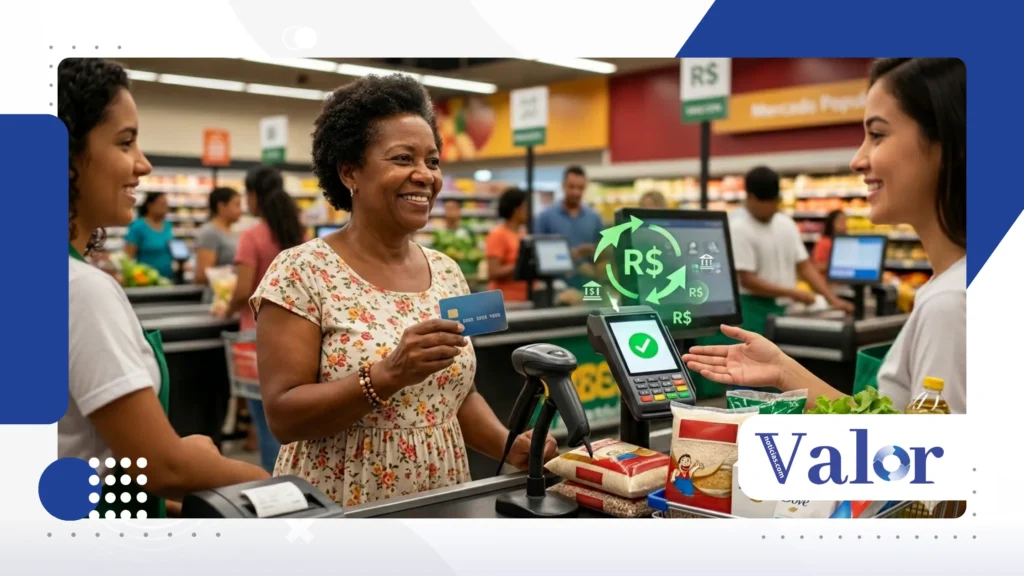
THE tax cashback system It emerges as the central pillar of the new Brazilian tax governance, promising to return taxes directly to low-income families in an automatic and technological way.
Advertisements
This change is not merely technical, but an attempt to fix the system that, for decades, has weighed more heavily on the plate of those who have less.
This initiative represents a necessary shift, replacing the old generic tax breaks — which often resulted in company profits — with a model of targeted social justice.
It's technology at the service of redistribution, focused on those who truly need support to make ends meet at the end of the month.
In this article, we will dissect the practical workings, eligibility criteria, and real impact this innovation will have on the national economy and your wallet in 2026.
Understanding how money is returned is the first step towards exercising full citizenship.
Summary
- What is a tax cashback system and how does it work?
- Who is eligible for the benefit during the pilot phase?
- How will the money be returned to the citizen?
- Which products generate the highest tax return?
- Comparative table of tax rates and refunds.
- The impact of cashback on national revenue.
What is a tax cashback system and how does it work?
The implementation of the tax cashback system In 2026, take the Tax Reform off the drawing board and put it on the supermarket checkout counter, focusing on the return of IBS and CBS taxes.
It puts an end to that feeling that taxes are a black hole with no way out.
The mechanism uses the infrastructure of the Single Registry and the Electronic Invoice to identify the buyer and calculate, in real time, the portion of the tax that should be returned to the bank account.
This is not a loyalty gift, but a right to a refund.
Unlike commercial reward programs, this model has a legal nature of distributive justice.
The goal is to neutralize the regressive nature of the tax system, a historical distortion that causes basic consumption to disproportionately penalize lower incomes.
Experts point out that blockchain technology ensures data security, allowing millions of daily transactions to be processed without creating loopholes in tax privacy.
It is a robust system, designed so that bureaucracy does not swallow up the benefit before it reaches its destination.
Transparency is the real advantage here. Citizens can now see exactly how much tax they paid and how much will be refunded through official apps, transforming the act of purchasing into a moment of social control and financial awareness.
Who is eligible for the benefit during the pilot phase?
In this initial stage, access to tax cashback system It is restricted to families registered in the CadÚnico (Single Registry for Social Programs) with a monthly per capita income of less than half the minimum wage. It is a litmus test focused on the base of the pyramid.
The government prioritized vulnerable groups to test the resilience of payment systems and the integration between municipal, state, and federal databases.
This is where the system needs to prove that it works without flaws or unfair exclusions.
The right to eligibility is validated at checkout; the consumer simply needs to provide their CPF (Brazilian tax identification number).
This simple gesture triggers a digital process that, while seemingly invisible, carries with it a complex network for verifying social data in milliseconds.
The positive impact should be immediate, generating a multiplier effect on the economy of the suburbs and small towns.
Refunded funds typically generate local consumption, fueling a cycle of monetary circulation that benefits small businesses and communities.
The technical success of the pilot phase will dictate the pace of inclusion of new lower-middle-class segments in the program.
How will the money be returned to the citizen?
The cash flow of tax cashback system It was designed to be intuitive, using Pix to credit funds directly to accounts linked to the CPF (Brazilian tax ID) of the main beneficiary within the family unit. Money in hand, without delay.
The refund can occur in two formats: immediate reversal or monthly accumulation with automatic deposit.
This flexibility aids household planning, allowing the family to choose the method that best suits their immediate financial reality.
There is no need to fill out forms or make manual requests, something that has always been an obstacle for citizens.
The tax authority's artificial intelligence cross-references invoices with social data to authorize payments autonomously.
The modernization of commercial automation in retail was the crucial leap forward. Now, communication between the point of sale and the Central Bank occurs instantly, ensuring that technological efficiency translates into real relief for the consumer.
For those who do not yet have a bank account, the government provides simplified social accounts.
This ensures that the benefit reaches even the unbanked population, promoting financial inclusion that goes far beyond the simple reimbursement of taxes paid.
Which products generate the highest tax return?
The basic food basket is the heart of the program, but the tax cashback system It also covers electricity, water, and cooking gas bills.
The focus is on reducing taxes on essential items, those things that no one can stop consuming.
Essential goods have more aggressive tax return rates, reaching up to 100% of CBS (Contribution on Goods and Services) for families in extreme poverty.
It is a pragmatic tool to combat food insecurity, restoring purchasing power where it is most scarce.
Conversely, superfluous or unhealthy items, classified under the "Selective Tax," do not generate credits.
This logic sends a clear message: state subsidies should promote healthy consumption and dignity, not habits that generate future costs for the state.
This differentiation allows the government to direct fiscal incentives to strategic sectors. Cashback ends up functioning as a fine-tuning mechanism in the economy, ensuring that the subsidy fulfills its social function of reducing inequalities without wasting public resources.
The list of eligible items is updated quarterly by the Steering Committee. This agility allows the benefit to be adapted to seasonal market variations and price crises, keeping the purchasing power of the most vulnerable population minimally stable.
+ Income Tax 2026: See everything that has changed for this year's tax return.
Comparative table of tax rates and refunds.
See below how the financial return performs in practice in 2026. This data shows that the impact is most profound on essential items, where every penny recovered makes a difference in the monthly budget.
+ What changes with the new ceiling for the Minha Casa, Minha Vida program?
| Product Category | Estimated Tax Rate (IBS/CBS) | Percentage of Refund | Impact on Final Price |
| Basic Food Basket | 26.5% (reduced) | 100% from CBS / 20% IBS | Actual reduction of 15% |
| Electric Energy | 26,5% | 50% from CBS / 20% IBS | Monthly relief on your bill. |
| Cooking Gas | 26,5% | CBS 100% | Significant reversal |
| Personal Hygiene | 26,5% | 50% from CBS / 20% IBS | Greater accessibility |
The impact of cashback on national revenue.
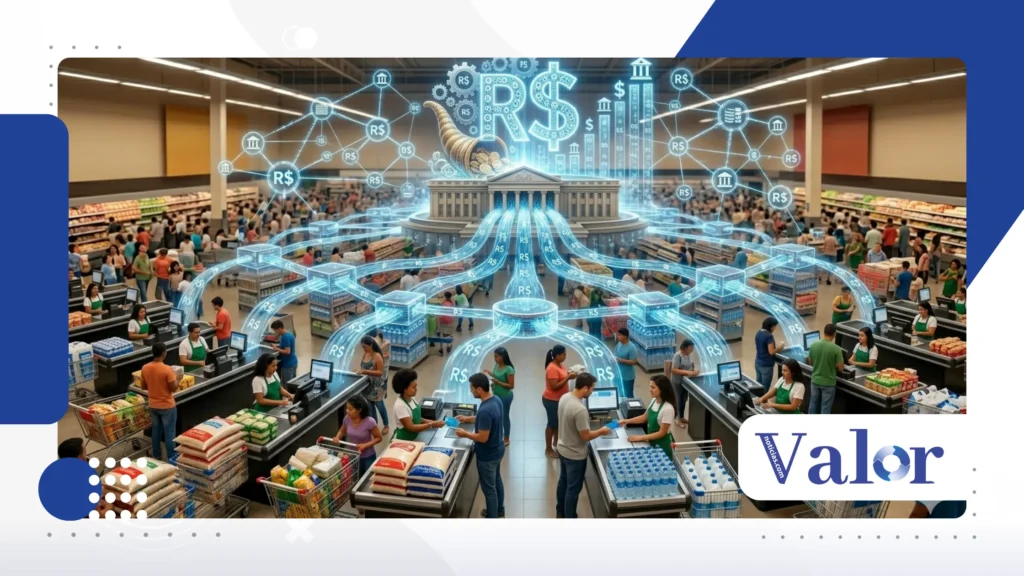
Although it may seem like a revenue loss, the tax cashback system It functions as a powerful antidote against informality. The consumer becomes the state's greatest inspector by demanding a receipt for every purchase.
Increased transparency in commercial transactions tends to offset the amounts returned.
We have created a virtuous circle where the tax base expands organically, while the burden on the shoulders of the poorest decreases sustainably.
Economists argue that this model surpasses the old withholding tax exemptions. Previously, the tax was removed from the product, but the price rarely fell for the consumer.
Now, the money leaves the state and goes directly to the citizen's CPF (Brazilian individual taxpayer registration number).
With full digitization, the government obtains accurate data on consumer behavior.
This allows for the design of much more assertive public policies, monitoring inflation and acting quickly in sectors that exhibit unjustified price distortions.
The goal is to transform Brazil into an international benchmark in social tax technology.
Exporting this management model could help other nations struggling to reconcile fiscal balance with the urgent need to promote distributive justice in unequal societies.
+ Mercosur-EU agreement moves forward and creates a market of 720 million.
Conclusion
The outcome of this pilot phase should not be seen merely as a technical victory, but as a promise that the country's fiscal future can finally be more humane.
THE tax cashback system It shifts the focus away from the State and places it where it should always be: in the well-being of the citizen.
By transforming taxes into resources that return to the table of those who need them most, Brazil is experimenting with a new social contract, one that is more transparent and less unequal.
This journey, which is now beginning on an experimental scale, carries the expectation of a nation that seeks efficiency without sacrificing empathy.
If the model succeeds, revenue collection will cease to be an invisible burden and become a visible mechanism of justice.
This marks the beginning of an era where technology serves not only to monitor, but also to support and redistribute, ensuring that economic progress truly reaches all Brazilian homes.
According to the official program guidelines detailed by Transparency PortalSocial surveillance will be the fuel to ensure that this system does not lose its original purpose over the years.
FAQ – Frequently Asked Questions
1. Does the tax cashback expire if I don't use it?
No. The returned funds belong to the citizen and do not have an expiration date.
The balance remains in the bank account or digital wallet until the account holder decides to withdraw it or make new payments.
2. Do I need a smartphone to participate?
The app is useful for checking your balance, but cashback is processed using the CPF (Brazilian tax identification number) provided at the time of purchase.
Those without a smartphone can check prices at partner agencies or self-service terminals using their documents.
3. Do companies also receive this cashback?
No. The program is focused exclusively on individuals enrolled in social programs.
The business sector continues to operate under the conventional tax credit regime provided for in the IBS and CBS legislation.
4. Is the cashback applied to the total value of the receipt?
The calculation is made only on the portion of taxes (IBS and CBS) included in that transaction, and not on the final price of the product.
The percentages vary according to the category of the item purchased and the social profile of the buyer.
