
New credit scores that go beyond the traditional score

To the new credit scores are transforming access to the financial market, without a doubt.
Advertisements
In this article, you'll understand what they are, how they work, why they emerged, their impact on your daily life, how to protect your data, and what practical strategies to adopt to gain advantages in this new scenario.
So, be sure to read on to find out more!
How did credit evolve in Brazil?
For decades, credit granting in Brazil was based on a single number: the traditional score.
It mainly considers the history of paid-off debts, length of relationship with institutions and default.
But although this model is still in use, it has proven to be limited in evaluating consumers with informal income or more modern profiles.
With the popularization of digital banks, open banking and online consumer behavior, the following have emerged: new credit scores.
They offer a richer approach, integrating data such as recurring service payments, digital account transactions, variable income, and even financial habits.
The objective is not just to measure risk, but to understand the consumer in a more complete, contextualized and fair way.
See how interesting: How to manage multiple bank accounts efficiently and securely
What has changed in practice?
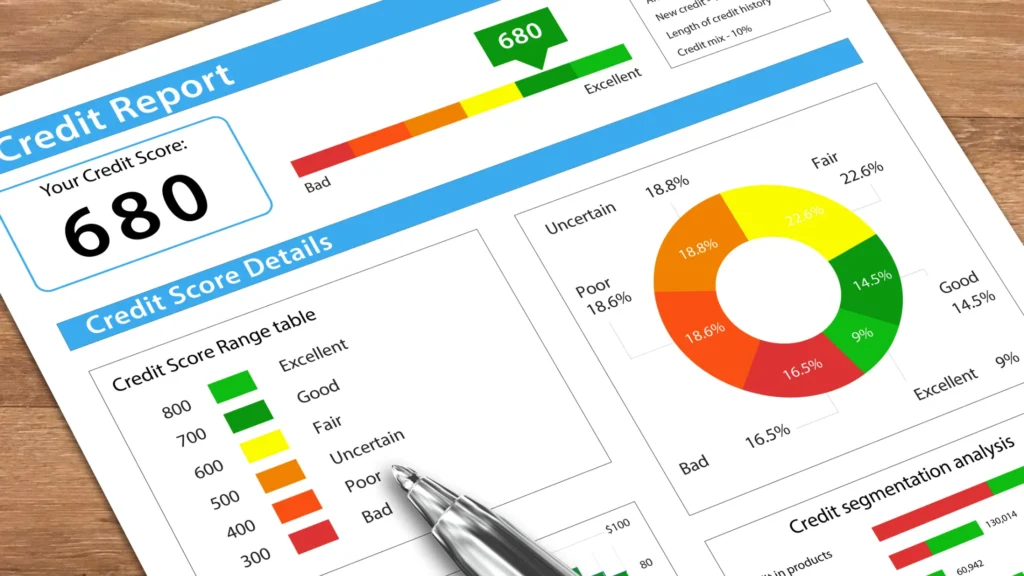
The main change is in the way your financial behavior is interpreted.
Before, if you didn't have a credit card or previous financing, you were practically invisible to the system.
Paying rent on time, maintaining active service subscriptions, and using payment apps regularly are now considered positive signs of a good payer.
For example, an app delivery person who receives payment via Pix, pays for Spotify and electricity bill by direct debit, even without formal employment, you can have a favorable analysis.
This is because their financial behavior demonstrates commitment and organization—attributes that new analyses value. It's a democratization of credit based on real, everyday data.
You should also know: Credit Score: 12 Habits That May Be Harming Your Score
Components evaluated
The new analysis does not discard the traditional score, but complements it with multiple sources of information.
Below is a table with the main criteria and their respective weights, based on data released by Brazilian fintechs and Central Bank reports from 2024:
| Criterion | Weight (%) | Relevance |
|---|---|---|
| Traditional score | 20 | It is still the starting point of most analyses |
| Recurring payments | 25 | Demonstrates discipline and ability to fulfill commitments |
| Digital history | 20 | Behaviors in apps, e-commerce and digital services |
| Variable income | 15 | Considers stability in informal or application-based payments |
| Rent and housing | 20 | Regularity in payments is seen as a strong sign of reliability |
This data allows for a broader understanding of the consumer's profile. Instead of focusing on past banking history, the system now sees how the individual manages their finances in the present.
This certainly benefits young people, the self-employed, and even people who have returned to consuming after periods of instability.
Advantages for those seeking credit
The great benefit of new credit scores is inclusion. Millions of Brazilians who previously couldn't prove their income or financial history are now recognized by the financial system.
On-time payments for essential services, subscriptions, and rent now serve as a calling card for financial institutions.
Furthermore, these new analyses reduce reliance on traditional collateral, such as real estate or guarantors. This increases consumer autonomy and favors more flexible negotiations.
A survey released by Serasa in December 2024 revealed that 37% of respondents obtained better rates on loans after updating their behavioral data on credit platforms.
Don't go yet, read also: Simple living and healthy finances: where is the connection?
Benefits for banks and fintechs
For institutions, the benefit is twofold. First, they reach a much larger audience, sustainably expanding the credit market.
Second, the accuracy of analyses improves, reducing the risk of default. A report from the Central Bank found that, between January and September 2024, fintechs that adopted hybrid analysis (traditional + behavioral) had 18% fewer microcredit defaults.
This model also allows you to customize offers. A customer with a good track record with payment apps can receive offers from card with cashback.
Those who are late with their utility bills can receive financial guidance or lower limits. The experience becomes more tailored to their individual profile, increasing customer engagement and loyalty.
Precautions and privacy
Broader data collection brings benefits, but requires accountability.
The use of personal information is subject to the General Data Protection Law (LGPD), which guarantees citizens the right to know what data is being used, for what purpose, and how to contest it.
This protection is essential in a scenario where browsing, purchasing, and financial transaction data become part of the equation.
It's important to read the terms of use for each application and check whether the institution offers an option to disable sharing.
Additionally, platforms such as Central Bank Registration allow you to check which institutions are accessing your information.
You're still in control—and it should remain that way. Transparency is key to balancing innovation and security.
Strategies to improve your score
Anyone who wants to benefit from the new analytics needs to adopt consistent financial habits.
One of the most effective actions is to maintain automatic debit payments for essential services. This reduces the risk of late payments and demonstrates stability.
Regular use of digital accounts and payment wallets also helps, as it signals that you are constantly moving funds.
Another powerful tip is to diversify your income sources—if you have a second informal job or sell products online, record these incomes.
Even small amounts added over the months have a positive impact. Finally, avoid leaving outstanding bills, even small ones.
Many models penalize minor delays, and this can make a difference in your final score.
A little-known fact is that some apps, such as Serasa Limpa Nome, offer simulations that show how much a renegotiation can improve your credit score.
These tools are worth exploring. And, of course, regularly monitoring your history on official platforms like SPC Brasil and Boa Vista is essential to understanding your progress.
What to expect in the coming years?
The tendency is that the new credit scores become even more sophisticated. Companies are already testing the inclusion of indicators such as engagement with financial education, responsible credit card use, and even sustainable habits.
For example, consumers who opt for solar energy or public transportation services may, in the future, earn extra points in some analysis models.
According to the World Economic Forum's 2025 report, several countries—including Brazil, India, and South Africa—are advancing guidelines to ensure that behavioral data used in credit is ethical, auditable, and auditable.
The aim is that the intelligence used to predict default also respects the principles of justice and equity.
The analogy here is simple: while the old score was like a 3x4 photo, the new system is like a documentary.
He observes not only the image, but also the movement, choices, and patterns. The final portrait is much closer to reality—and therefore more accurate.
Reliable resources
For those who want to delve deeper, it is worth visiting reliable sources such as Serasa Experian, which offers detailed explanations about the scoring models used in Brazil, as well as simulations and comparisons.
We also recommend following Open Finance Brasil's studies, which show how data sharing is being structured in the country.
These portals offer not only technical content but also practical guidance on how to protect your data and benefit from changes in the credit market. Information is power—and in this new landscape, knowledge can be worth money.
Frequently Asked Questions
1. Do the new scores replace the traditional score?
No. They complement it. The traditional score is still used, but now it's integrated with other data to form a more comprehensive analysis.
2. Do I need to authorize the use of my data?
Yes. All data collection must comply with the LGPD, and you have the right to know, authorize, or revoke sharing.
3. Is it safe to use apps that analyze my score?
It depends on the app. Choose well-known platforms with security seals and clear privacy policies.
4. Does a higher score guarantee approval?
Not necessarily. It increases your chances, but each institution evaluates other criteria, such as internal policies and credit risk.
5. How can I track my score?
Platforms such as Serasa, Boa Vista, SPC Brasil and the Central Bank Registry offer free or low-cost access.
To the new credit scores represent a real advance in the way the market views the consumer.
More than just a number, you are now evaluated based on your real, everyday behavior and the way you actually handle money.
This change requires responsibility — from institutions, yes, but also from you.
Want to ensure your profile is well-interpreted? Organize your finances, connect your data wisely, and seek reliable sources. The credit of the future is more human—and within your reach.
