
The rise of the microtransaction economy in everyday consumption.
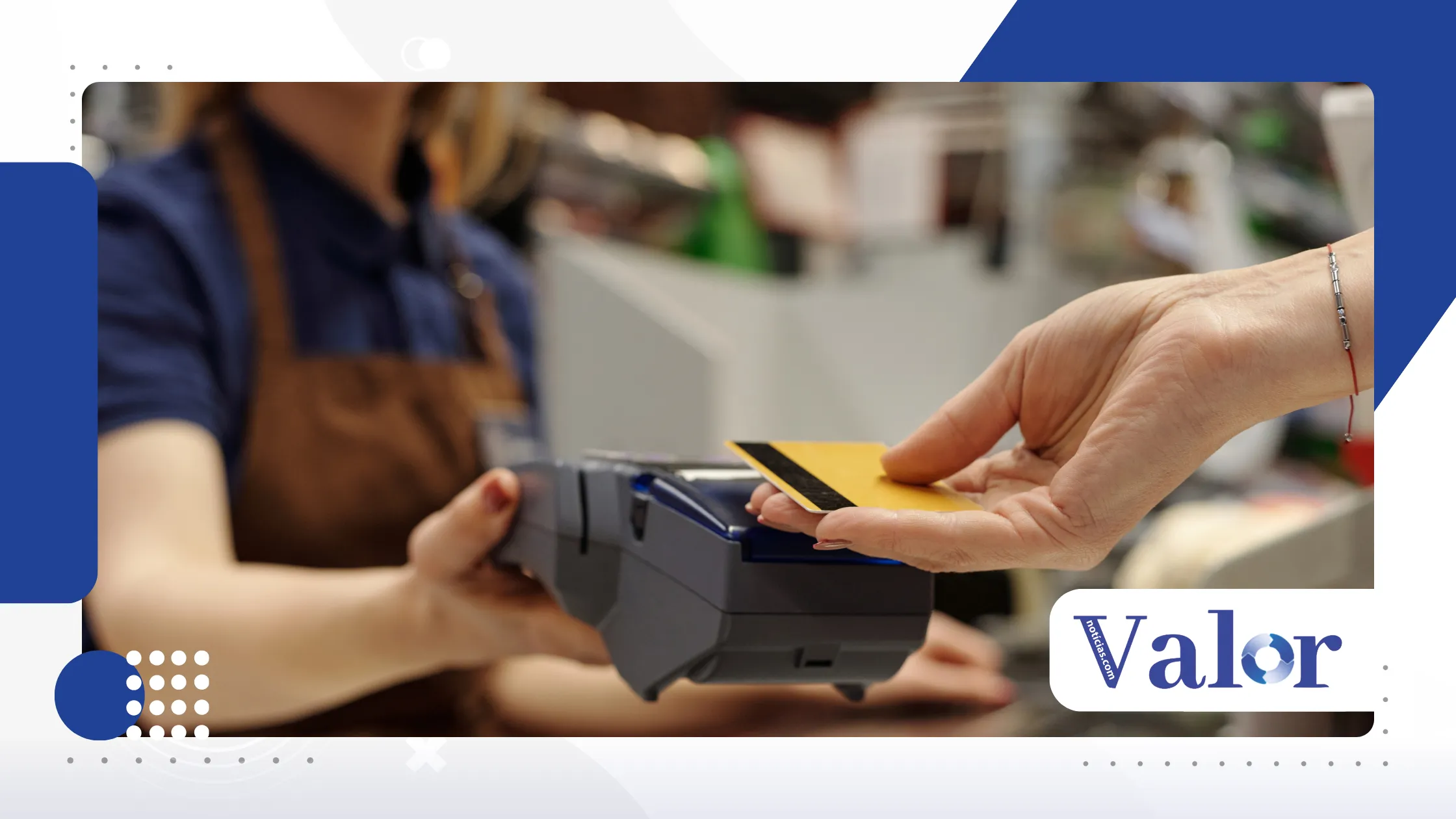
THE microtransaction economy It has ceased to be an "annex" of the gaming universe and has established itself as the central nervous system of consumption by 2026.
Advertisements
It's not just about buying a "skin" or a bonus in an app, but about re-engineering the way money flows between our fingers and screens.
The phenomenon is silent, but persistent. We are fragmenting the cost of existence into small digital slices, which brings an almost addictive convenience, but also raises questions about how much we have lost sight of the bigger picture. It is the triumph of "pay-per-pulse" over long-term planning.
In this analysis, we peel back the layers of this new financial order, observing how technology and human behavior collide in every penny transacted.
Summary
- What defines the microtransaction economy today?
- How does this model impact family budgets?
- Which sectors will dominate small payments in 2026?
- The psychology behind low-value consumption
- Comparative data: The growth of fast transactions
- FAQ: Frequently asked questions about the topic
What defines the microtransaction economy in the current scenario?
The foundation of microtransaction economy It's the disintegration of the final product. Whereas before you bought the complete package, today you buy access to the details. It's the logic of granularity taken to the extreme, where the cost of entry is almost invisible.
By 2026, global infrastructure will have finally solved the problem of operational fees. With transaction costs trending towards zero, charging R$ 0.15 for a service has become not only viable but extremely profitable when scaled to millions of users.
This fluidity creates a kind of "negative friction." Buying has become as easy as breathing or double-clicking.
The danger, however, lies precisely in this ease: when the act of spending doesn't hurt, the perception of value is diluted.
The convergence with the Internet of Things has transformed passive objects into economic agents. Your refrigerator or your car now makes micro-purchase decisions based on immediate need, operating in an ecosystem where the human is often just the final guarantor.
How does the microtransaction economy change financial planning?
Managing cash flow in 2026 requires more than spreadsheets; it demands a new mindset. The problem isn't the rent bill, but the "death by a thousand cuts" caused by dozens of automatic debits that rarely exceed double digits.
The accumulated volume within the microtransaction economy It often masks an erosion of real purchasing power.
It's easy to ignore three reais here and five there, but the sum of these micro-decisions has the annoying habit of compromising the future.
Economic psychology warns that the absence of a physical barrier—the act of taking money out of a wallet—removes the inhibitory brake on consumption. The digital world is abstract, and micro-spending is almost ethereal, which facilitates financial self-deception.
On the other hand, we cannot ignore the democratization that the model offers. Services that previously required hefty subscriptions are now available in installments, allowing less affluent classes to access high-tech tools without incurring debt through loyalty contracts.
Balance is the only way out. Financial health today depends on aggregation tools that bring these "invisible" expenses into the light, forcing consumers to confront the mathematical reality behind digital comfort.
What are the leading sectors in micropayments in 2026?
Urban mobility has undergone a metamorphosis. We pay per square meter of occupied asphalt or per minute of autonomy in shared vehicles, eliminating the need for ownership but creating a constant dependence on microflows of capital.
In entertainment, the microtransaction economy It buried the static catalog model. Now, the viewer pays for the camera angle of a live show or for an exclusive real-time analysis, transforming passive consumption into a constant transactional experience.
Journalism has also found new life. The model of pay-per-article It allows the reader to consume quality information without being tied to a single source, which fosters a diversity of viewpoints, although it weakens institutional loyalty.
Even electricity has become fragmented. With smart grids, you can sell the surplus energy from your solar battery to your neighbor for a few cents during peak consumption, turning homes into micro energy stock exchanges.
To understand how regulation attempts to bring order to this creative chaos, the Central Bank of Brazil It maintains constant updates on the regulations governing these new digital financial pathways.
Why does the human brain respond so well to small expenses?
Neuroscience explains that the brain loves a quick win. Each small purchase releases a homeopathic dose of dopamine without activating the warning signal in the prefrontal cortex, which usually prevents us from making bigger financial blunders.
In the environment of microtransaction economyThe interface design is intended to be "liminal," meaning it occurs at the edge of consciousness. It's an almost reflexive process, where desire and satisfaction are separated by milliseconds.
Companies have learned to gamify scarcity. Offers that expire in minutes or low-value "one-of-a-kind" items create an artificial urgency that the human brain, shaped by evolution to seize immediate opportunities, rarely manages to ignore.
This choice architecture is not accidental; it is applied behavioral science. The ethical challenge for 2026 is to ensure that this facility does not become a form of cognitive exploitation, especially among the most vulnerable users.
Algorithmic transparency emerges here as a necessary defense. We need systems that tell us "no" or that, at least, show us a reflection of our consumption before the impulse becomes a destructive habit.
+ The growth of the informal digital economy in Brazil in 2026
Growth comparison: The volume of small transactions
Full digitization has not only changed the means of payment, but has altered the nature of the commodity. What was once a solid product is now a fluid service, paid for in infinitesimal installments that keep the economic machine running.
The table below reveals how this paradigm shift has captured market segments that, five years ago, still operated under the logic of one-time sales or monthly subscriptions.
+ IBS and CBS 2026 begin to impact consumer prices.
| Area of Activity | Volume in 2024 (Billion) | Volume in 2025 (Billion) | Projection 2026 (Bi) | Growth (%) |
| Digital Entertainment | $ 45,0 | $ 58,0 | $ 74,0 | 64,4% |
| Urban Mobility | $ 22,0 | $ 31,0 | $ 42,0 | 90,9% |
| Content and Media | $ 12,0 | $ 18,0 | $ 25,0 | 108,3% |
| Utilities (IoT) | $ 8,0 | $ 14,0 | $ 23,0 | 187,5% |
What are the competitive advantages for companies that adopt this model?

Companies that have migrated to the microtransaction model have achieved something rare: reducing customer risk.
It's much easier to convince someone to spend fifty cents than fifty reais, creating an infinitely wider sales funnel.
THE microtransaction economy It functions as a real-time data lab. Each click is a preference vote, allowing brands to adjust their products almost instantly, discarding what doesn't work and doubling down on what engages.
There is brutal efficiency in this strategy. It allows you to monetize the "long tail"—that mass of users who would never pay for a premium service, but who are willing to spend small, sporadic amounts for convenience or urgency.
Loyalty, in this context, is not built on contracts, but on zero friction. The consumer stays because it's easy, because the service already knows their habits, and because the cost of leaving seems greater than the small ongoing expense.
Ecosystems that master this dynamic become almost unbeatable, as they create such a branched network of dependencies that the user doesn't even realize they are completely immersed in a single service platform.
How does digital security protect consumers from micro-spending?
Security in 2026 needs to become as invisible as the cost itself. AI systems monitor billions of operations per second, searching for anomalies that deviate from the behavioral pattern without disrupting the user experience.
THE microtransaction economy It relies on passive biometrics. The way you hold your phone or the speed at which you type becomes your signature, ensuring that the payment is legitimate without the need for complex passwords every ten minutes.
The use of decentralized networks and blockchain has brought an essential layer of immutability. Every fraction of a cent has a digital trail, which drastically reduces legal disputes and protects the ecosystem against systemic fraud.
Modern wallets now include "AI auditors" that alert you when micro-spending patterns are getting out of control, acting as a digital financial conscience in a world that invites us to spend all the time.
Trust is the real currency. Without the guarantee that these small amounts are being processed ethically and securely, the entire micropayments model would collapse under the weight of distrust and bureaucracy.
+ Productivity in Brazil hinders sustainable economic growth.
Reflections on a fragmented future
The advance of microtransaction economy This signals the end of the era of ownership and the rise of the era of access. We are exchanging the weight of property for the ease of temporary use, a transition that will define the identity of society in 2026.
This journey towards the absolute fragmentation of consumption is a path of no return, driven by technology and the human desire for immediate gratification.
However, the freedom to pay "only for what you use" comes with the responsibility of not getting lost in the sum of the parts.
The future will not be about how much we own, but about how fluid our interactions with the world around us are. Ultimately, the economy of small things is what is shaping the big changes of our decade.
To understand how these trends fit into the global geopolitical and financial landscape, analyses of International Monetary Fund (IMF) They offer an essential macro-level perspective for those who wish to anticipate the market's next moves.
FAQ: Frequently asked questions about the microtransaction economy
1. What exactly are microtransactions in everyday life?
These are payments of reduced amounts for goods or services sold in smaller quantities, such as using software for an hour, reading a single article, or accessing an extra feature in an app.
2. Can microtransactions lead to consumer debt?
Yes. A low perception of spending can lead to impulsive consumption. Without monitoring, the sum of small amounts can exceed the cost of a traditional subscription.
3. What technologies make these payments viable?
Instant payment infrastructure with near-zero operating costs, passive biometrics, and blockchain-based ledgers for security and scalability.
4. Is it safe to make many small payments on different websites?
Yes, provided that reliable digital wallets and authentication systems are used to protect your key data through tokenization.
5. What is the difference between a subscription and a microtransaction?
A subscription is a fixed-term rental; a microtransaction is payment for actual and specific usage, offering more flexibility but requiring greater user control.
