
Credit card and meal voucher: understand the difference in their use.
Credit card and meal voucher They share space in the same portfolio, but operate under diametrically opposed financial and legal logics.
Advertisements
In the rush of a work lunch, choosing between magnetic stripe or contactless payment seems automatic.
However, confusing the nature of these two tools is costly — whether in the form of excessive interest at the end of the month or labor sanctions for misuse.
Understanding where corporate benefits end and bank debt begins is the first step in taking control of your own budget.
Market dynamics have changed, flexible cards have gained ground, and the rules of the game have been updated.
Treating both benefits as if they were the same extension of your salary is a structural error that silently affects the income of millions of Brazilians.
In this guide, we break down the mechanics of each option, analyze the weight of current legislation, and present practical ways to maximize the use of both resources without falling into the traps of the financial system.
Summary
- What are the fundamental differences between a credit card and a meal voucher?
- How does the Worker's Food Program (PAT) legislation work?
- What is the financial impact of each payment method on your budget?
- Which establishments accept each payment method and why?
- How can you organize your finances using both resources efficiently?
- Comparative table: Credit Card vs. Meal Voucher
- Final Considerations
- Frequently Asked Questions (FAQ)
What are the fundamental differences between a credit card and a meal voucher?
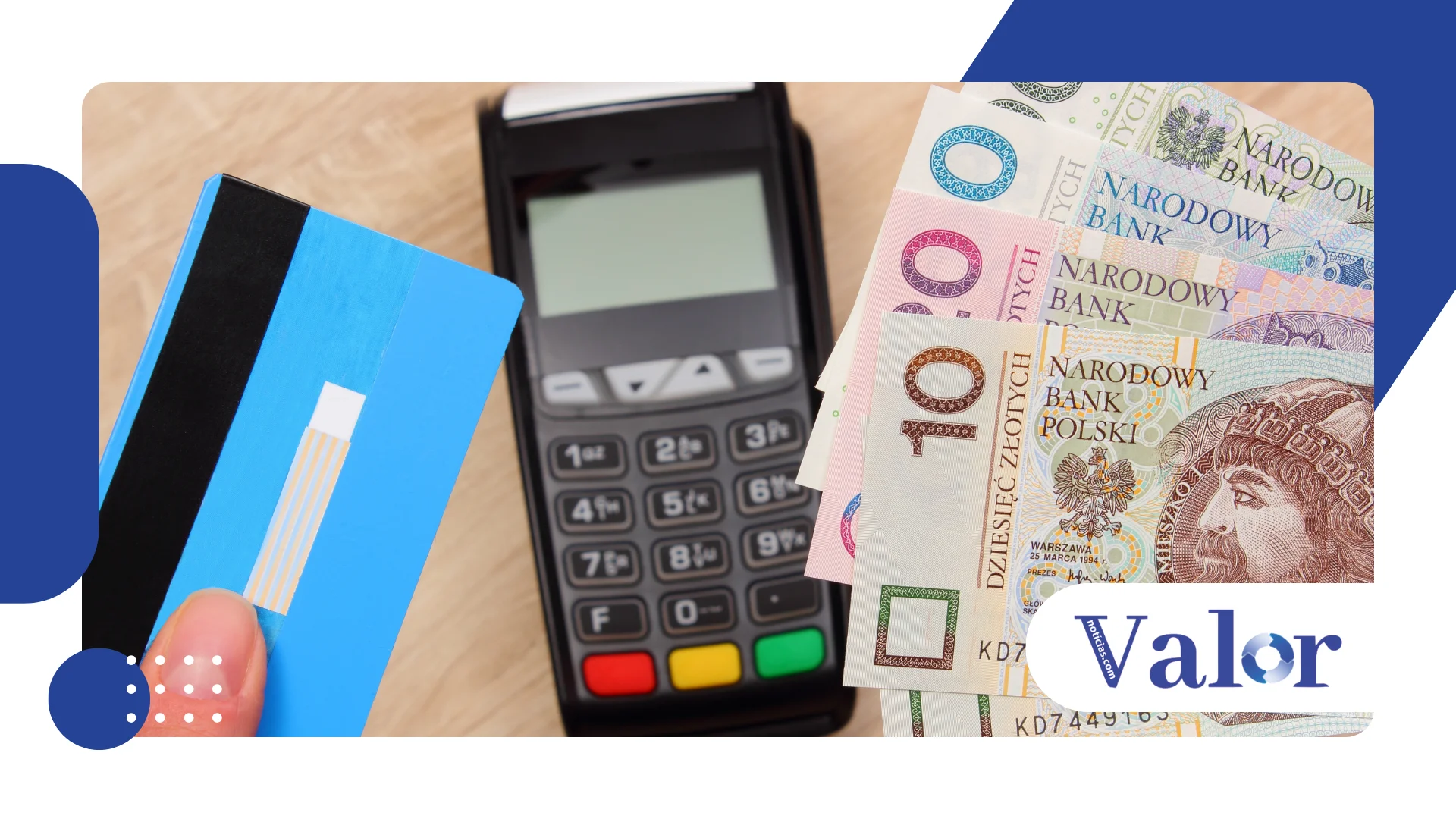
The big trap of using credit card and meal voucher To indiscriminately ignore who is actually financing the transaction is to disregard the truth. Credit is nothing more than a loan contracted for a very short term.
The bank grants an operational limit based on your risk profile, charges fees if you are late with a payment, and imposes no restrictions on the type of product purchased. If you want to buy a television or pay for a coffee, the card will accept it without question.
Meal vouchers, on the other hand, carry what labor law calls a "designated purpose.".
It arises from a tripartite working relationship — between the company, the employee, and the accredited provider — and exists exclusively to cover the worker's nutrition costs during their daily work hours.
There is something unsettling about the unrestricted use of credit cards for everyday expenses: when you pay for lunch with credit, you are pledging your future income to satisfy an immediate and fleeting consumer need.
The corporate benefit operates on a subsidized prepaid model. The money is deposited, remains restricted to the food network, and does not allow cash withdrawals.
Another point that is often misinterpreted concerns the ability to pay in installments. While credit allows for the spreading of durable goods over several months, meal vouchers consume the balance instantly via debit.
There is no such thing as "paying in installments for a ready-made meal." If the balance reaches zero in the third week of the month, the responsibility for covering subsistence expenses falls entirely on the worker.
How does the Worker's Food Program (PAT) legislation work?
The Worker's Food Program (PAT), created in the 1970s to combat workplace malnutrition, has undergone profound reforms in recent years.
Recent regulatory updates sought to modernize a sector hampered by large operators, but left the core of the law intact: the benefit can never be converted into cash nor lose its nutritional function.
The consolidation of rules brought about by recent decrees has paved the way for free number portability and network interoperability.
In practice, workers gained the right to choose their card issuer and to use the benefit at a much wider range of establishments, breaking historical monopolies that stifled small restaurants with extortionate convenience fees.
To consult the complete details of the regulatory frameworks and decrees that govern the Brazilian labor ecosystem, it is worth checking the normative acts of... Ministry of Labor and Employment.
Selling the balance of a meal voucher or attempting to use it at beverage distributors or gas stations is not just a "subtle diversion"—it is fraud against labor and tax laws.
Companies that tolerate misconduct lose their exemption from social security contributions, and the employee involved runs a real risk of being dismissed for just cause.
What is the financial impact of each payment method on your budget?
The way you allocate credit card and meal voucher It defines the leeway of your monthly budget. When the meal voucher is used to its full capacity, it acts as a shield over your net salary.
Every real spent on the voucher is a real of your direct remuneration that remains preserved in your checking account.
The problem begins when the benefit balance runs out before the end of the month—a frequent phenomenon in metropolitan areas with an inflated cost of living. The automatic reaction of most people is to pull out their credit card at the corner restaurant.
By shifting your daily food expenses to your credit card bill, you create a dangerous domino effect. Daily consumption expenses accumulate with installment purchases, pushing the due date to the following month.
If any unforeseen financial event occurs during this period, the risk of falling into revolving credit interest—one of the most expensive forms of credit in the national financial system—grows exponentially.
Personal finance strategists recommend viewing meal vouchers as a non-negotiable ceiling for eating out. Once the balance runs out, the sustainable solution isn't to use the voucher, but rather to resort to packed lunches or readjust spending until the next top-up.
Which establishments accept each payment method and why?
The presence of a brand logo on the entrance of a commercial establishment depends on a cold equation of operational costs and tax classification.
It's not out of mere whim that the neighborhood bakery accepts your bank card but refuses your meal voucher.
To process credit cards, the merchant pays a discount rate (known as MDR), which typically revolves around predictable settlement periods.
Accreditation for meal vouchers requires that the establishment have an Economic Activity Code (CNAE) strictly related to prepared food or the sale of food products.
Furthermore, the fees charged by benefit providers historically weigh more heavily on the pockets of small business owners. Therefore, many restaurants set minimum limits for accepting vouchers or simply refuse certain corporate brands.
Replacing a voucher with a credit card at a restaurant simply because the rewards provider's machine is "down" requires caution.
Demand that they try the transaction on another machine or look for accredited alternatives. Covering system failures at the accredited machine with your personal credit is a disadvantageous trade-off for your budget.
++ Benefit cards will now operate only as vouchers in Brazil.
How can you organize your finances using both resources efficiently?
Organizing the flow of funds between two different payment tools requires a simple method of separating accounts.
Technology is now on our side: most benefits apps allow you to track your average daily spending available until the next top-up date.
Dividing expenses into mental categories is an indispensable practical exercise:
- Meal Voucher: Expenses for ready-made meals, weekday lunches, and work-related snacks during the workday.
- Credit card: Planned purchases, durable goods, digital subscriptions, and potential emergencies are covered by a reserve fund.
Aligning the credit card billing cycle with the voucher payment date avoids cash flow problems.
If you know that your benefit is paid on the 1st of each month, your food budget gets a new lease on life right at the start of the month, easing the strain on your traditional bank account.
Fraudulently using a voucher by transferring the balance to third parties in exchange for cash at a discount ("premium") is a false advantage.
Anyone who sells R$ 500 in balance for R$ 400 in cash is instantly burning through 20% of their own purchasing power, in addition to risking their job for illusory liquidity.
++ The CAIXA Ícone card earns you 5 points per dollar on domestic purchases.
Comparative table: Credit Card vs. Meal Voucher
Below, we summarize the operational, legal, and risk asymmetries that separate the credit card and meal voucher in the payments ecosystem:
| Feature | Credit card | Meal Voucher (PAT) |
| Source of Resources | Financing line granted by banks | Corporate benefit paid for by the employer. |
| Purpose of Use | Unrestricted (goods, services, leisure and digital purchases) | For use exclusively in prepared meals and daily consumption. |
| Financial Risk | Revolving interest, penalties, and the possibility of negative credit reporting. | Zero (does not generate debt beyond the existing balance) |
| Settlement Method | Postpaid (monthly bill or future installments) | Prepaid (balance previously loaded by the company) |
| Cash Conversion | Allowed via cash withdrawal (subject to fees and interest). | Strictly prohibited by federal law. |
| Market Acceptance | Universal (physical, digital and international) | Restricted to the accredited power supply circuit. |
| Role in the Budget | Leverage or installment instrument | Direct protection of the worker's net income. |
Practical strategies to elevate the level of your editorial content.
The transition from a purely informative text to a high-value analytical piece requires the elimination of operational clichés and the replacement of generalizations with concrete observations about market reality.
When addressing complex topics—such as corporate benefits management, credit planning, or the consolidation of labor guidelines—the author's voice needs to demonstrate accessible technical expertise without resorting to distant academic jargon or artificial, concise structures.
There is something profoundly dysfunctional in attempting to automate writing without a critical look at the rhythm of reading: overly symmetrical sentences, standardized paragraphs, and the excessive repetition of key terms make any communication tiresome and predictable for the modern reader.
The true differentiator of SEO-focused and authority-building content lies in the balance between accurately answering the user's search intent and offering an original interpretation that adds social, historical, and financial context to everyday decisions.
When structuring analyses on the responsible use of financial resources and labor rights, the ultimate goal should always be to empower the reader with technical clarity and applicable tools, ensuring organic flow and ongoing relevance.
++ Card brands influence where credit can be used.
Final Considerations
The coexistence of credit card and meal voucher The daily routine of Brazilians reflects the complexity of our consumption and work relationships.
Treating these tools with the technical distinction they require is not an organizational whim—it's a defensive stance against the loss of assets.
Credit cards are useful for medium-term planning and for purchasing goods that exceed the immediate balance of a checking account.
Meal vouchers, on the other hand, are a right focused on keeping the worker's biological machinery functioning without compromising their subsistence salary.
Mixing up expenses, financing lunch on next month's bill, or trying to withdraw benefits balances are costly shortcuts. Financial balance stems precisely from clear limits: each card has its place, its time, and its rules.
To accurately monitor financial system rates, monetary policies, and the landscape of payment methods in the country, consult the consolidated statistics published by... Central Bank of Brazil.
Frequently Asked Questions (FAQ)
Can I use my meal voucher to do my monthly grocery shopping?
Meal vouchers are intended for the purchase of ready-made meals in restaurants, bakeries, and snack bars. For the purchase of supplies and shelf-stable groceries in supermarkets, the correct instrument provided for by the PAT (Worker's Food Program) is the food voucher.
What to do when the meal voucher balance runs out before the end of the month?
The safest option is to use the money available in your checking account or reorganize your routine by preparing meals at home. Using a credit card to cover daily food expenses should be a last resort, otherwise it risks inflating your future bill.
Is it legal to sell the balance on a meal voucher in exchange for cash?
No. The sale of corporate benefits balances is considered a serious violation under labor laws and the PAT (Worker's Food Program) regulations. This practice subjects the worker to dismissal for just cause and the company to the loss of tax incentives from the program.
Do flexible payment cards change the rules of use between credit and benefits?
Flexible cards have consolidated multiple balances onto the same physical card, but the legal division remains intact. The balance allocated to the food allowance card continues to be subject to PAT (Worker's Food Program) regulations, while the credit function remains governed by the standard banking contract.
