
International or foreign currency credit for importers and exporters
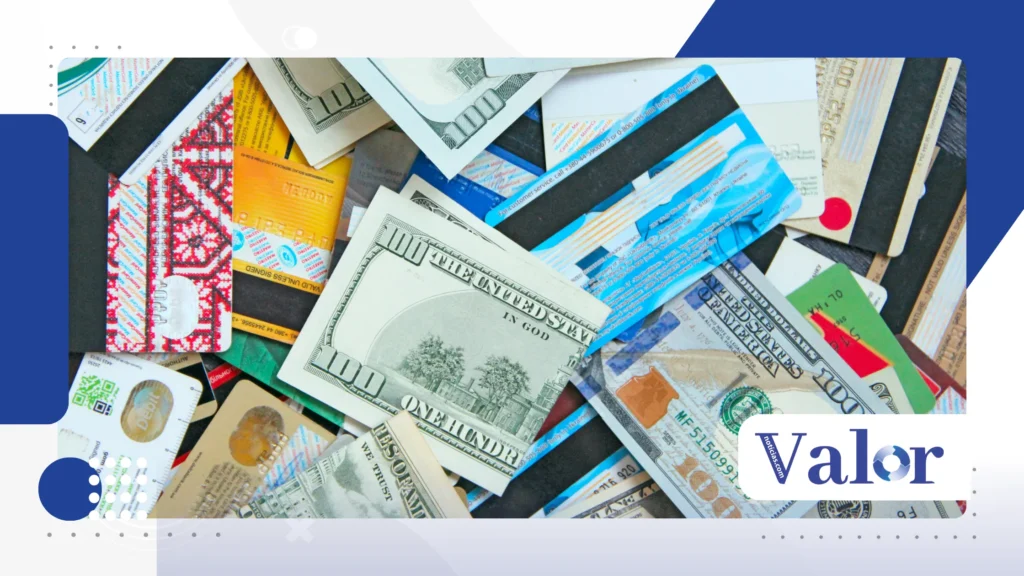
THE international credit or in foreign currency It represents the oxygen for companies operating on the global stage. Competitiveness in the 21st century demands much more than just a good product.
Advertisements
Above all, it demands robust and strategic working capital. Without liquidity to finance production or imports, many doors quickly close.
Brazilian importers and exporters face a daily challenge in managing their cash flows. International payment terms rarely align with domestic production cycles.
It is precisely in this vacuum that specialized financing comes in. It acts as the bridge that connects the business opportunity to its effective financial realization.
Understanding these modalities is no longer a differentiator, but a basic necessity for survival. Mastering the subject allows for better negotiation, reduced costs, and mitigation of inherent exchange rate risks.
In this comprehensive guide, we will explore the universe of... international credit or in foreign currencyWe will discuss the mechanisms that can transform the reality of your business.
Table of Contents
- What exactly is international credit or credit in foreign currency?
- Why are these lines of credit vital for foreign trade?
- What are the main payment methods for exporters (Pre-payment)?
- And for importers, how does financing (Finimp) work?
- What is the role of BNDES and commercial banks in this scenario?
- How does exchange rate risk impact international or foreign currency credit?
- What criteria do banks use to approve these loans?
- Comparative Table: Main Credit Lines
- Conclusion: The Strategy Behind the Financing
- Frequently Asked Questions (FAQ)
What exactly is international credit or credit in foreign currency?
Basically, we're talking about financing operations backed by strong currencies, such as the US dollar or the euro. They are specifically designed for foreign trade.
Unlike a regular loan in reais, the international credit or in foreign currency It is intrinsically linked to an import or export transaction.
For the exporter, it means receiving advance payment for a sale that will only be paid by the customer abroad months later. This guarantees immediate working capital.
For importers, it enables upfront payment to the foreign supplier. The importer, however, gains time to repay the financing bank here in Brazil.
This financial structure is what allows the machinery of global trade to keep turning. It accommodates different time zones, currencies, and payment terms.
The transaction is always finalized through a foreign exchange contract. The bank acts as the intermediary, assuming the credit risk and providing the necessary liquidity.
+ Cost of credit and bank spread: what has changed?
Why are these lines of credit vital for foreign trade?
The short answer is: competitiveness. In the international market, whoever offers the best payment terms often wins the contract.
THE international credit or in foreign currency This allows the Brazilian company to offer longer payment terms to its overseas clients. The client doesn't have to wait 180 days to receive payment.
Simultaneously, the importer can purchase raw materials by paying cash. This ensures bargaining power, enabling significant discounts from the international supplier.
Furthermore, these lines of credit usually have more attractive costs (interest rates). The rates are generally based on international indices, such as the SOFR, which can be lower than the Selic rate.
Managing cash flow is the biggest challenge in international trade. A mismatch between outflows (production, freight) and inflows (customer payments) can break a healthy company.
These financial tools therefore act as cash flow regulators. They ensure that operations do not stop due to a lack of resources at the wrong time.
Without this type of credit, only companies with enormous equity capital would be able to compete. They democratize access to the global market for medium-sized companies.
A nation's ability to export its products and import essential inputs depends directly on the health and accessibility of this type of financing.
What are the main payment methods for exporters (Pre-payment)?
In Brazil, the stars of export financing are ACC and ACE. Both are types of Advance on Exchange Contract, but they operate at different times.
ACC (Advance on Exchange Contract) is a pre-shipment method. The exporter receives the funds even before sending the goods abroad.
How does it work in practice? The company signs an export contract. With this contract in hand, it looks for a bank authorized to operate in foreign exchange.
The bank "buys" this future export. It advances the corresponding amount in reais to the exporter, already discounting the interest rate of the transaction.
This money is vital for financing production. The exporter can buy raw materials, pay wages, and cover the manufacturing costs of the order.
When the foreign importer finally pays for the goods, that amount (in foreign currency) is used to settle the foreign exchange transaction with the bank.
ACE (Advance on Delivered Foreign Exchange) is slightly different. It occurs in the post-shipment phase. The goods have already been sent abroad.
The exporter presents the shipping documents (such as the Bill of Lading) to the bank. With proof of shipment, the bank advances the proceeds from the sale.
ACE is used when the company has managed to finance production with its own resources. However, it needs working capital while awaiting payment from the customer.
Both methods are crucial. They transform a sale on credit into a cash sale, from the perspective of the Brazilian exporter's cash flow.
ACC payment terms can be up to 360 days before shipment. With ACE, the term is also flexible, depending on the agreement with the bank.
Choosing between ACC and ACE depends entirely on when the company needs the capital. The nature of international credit or in foreign currency It is adaptive.
+ Green or sustainable credit: lines of credit that encourage environmental practices.
And for importers, how does financing (Finimp) work?
For those who bring in supplies or products from abroad, the main tool is Finimp (Import Financing). It is the opposite mechanism to ACC/ACE.
Finimp is a international credit or in foreign currency Intended to pay the supplier abroad. The Brazilian bank pays the foreign exporter upfront.
This is a huge competitive advantage. The importer gains negotiating power because they are paying "cash" for the product or machine they wish to acquire.
Meanwhile, the bank grants the Brazilian importer a period to pay for this transaction. This payment can be made in reais or in the foreign currency itself.
The Finimp term can vary considerably. It can be short (up to 360 days), for working capital, such as the purchase of raw materials for industry.
It can also be long-term (several years). This applies to the import of heavy machinery and equipment, which require a longer amortization period.
The great benefit is the flexibility. The company nationalizes the product, processes it, sells it in the domestic market, and only then pays the financing bank.
Without Finimp, the Brazilian company would need to disburse the total import value all at once, severely compromising its working capital.
What is the role of BNDES and commercial banks in this scenario?
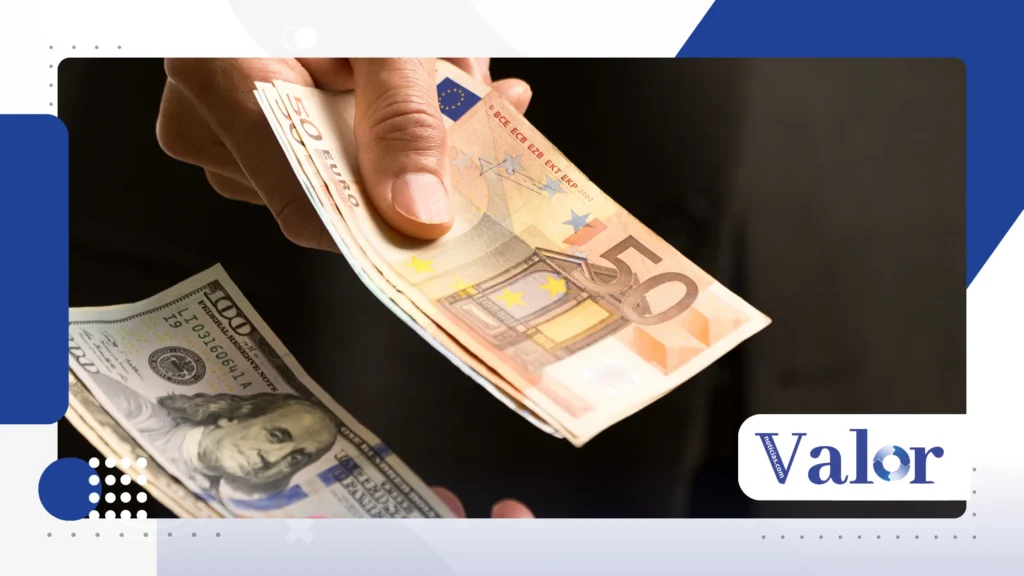
Commercial banks (such as Itaú, Bradesco, Santander, and Banco do Brasil) are the front line. They are the ones that operate ACC, ACE, and Finimp on a daily basis.
They analyze the company's credit risk, define the rates, and structure the foreign exchange transactions necessary to make the financing viable.
BNDES (National Bank for Economic and Social Development) acts in a complementary way. It focuses on more structured and long-term operations.
The BNDES Exim line, for example, supports the export of capital goods and complex services. These are operations that require longer financing terms.
The development bank is crucial for large-scale projects. It helps Brazilian industry compete in complex international tenders.
The outlook for 2025 is challenging, but robust. Brazil is coming off a record trade surplus in 2024, according to consolidated data from the MDIC (Ministry of Development, Industry, Trade and Services).
This positive performance increased the demand for international credit or in foreign currencyCompanies need support to maintain the pace of exports.
Therefore, the partnership between public development banks and the private banking network is what sustains the dynamism of Brazilian foreign trade today.
How does exchange rate risk impact international or foreign currency credit?
This is undoubtedly the most sensitive point of the entire operation. Exchange rate risk is the uncertainty about the value of the Real against the Dollar (or another currency).
Imagine that an importer takes out a Finimp loan of 1 million dollars. The dollar is quoted at R$ 5.00. The debt, therefore, is R$ 5 million.
If, at maturity, the dollar rises to R$ 5.50, the debt jumps to R$ 5.5 million. This is an additional cost that was not foreseen in the planning.
The same applies to the exporter who uses ACC. They advance the payment in reais, but the future settlement depends on the exchange rate on the day the importer pays.
Volatility is the enemy of predictability. Companies that fail to manage this risk are, in practice, speculating in the financial market, which is dangerous.
To mitigate this, there are "hedging" mechanisms (currency protection). These are financial operations that lock in the future exchange rate.
Instruments such as NDFs (Non-Deliverable Forwards), futures, or currency options allow a company to know exactly how much it will pay or receive in reais (Brazilian currency).
Manage the international credit or in foreign currency This necessarily involves managing exchange rate risk. One cannot exist without the other in global trade.
What criteria do banks use to approve these loans?
The analysis for foreign trade credit is more in-depth than that of a standard corporate loan. The bank evaluates both the company and the specific transaction.
The company's credit history (its "rating") is the first step. Its financial health, balance sheets, and ability to pay are rigorously checked.
However, the bank also analyzes the international transaction. Who is the buyer abroad? What is the risk associated with this client (payer)? Does their country offer stability?
In the case of Finimp, the bank assesses what is being imported. Is it a machine essential for production? Or a product for resale with a lower margin?
Collateral is often required. This can include receivables, real estate, or even the merchandise itself being financed in the transaction.
A company's experience in foreign trade counts for a lot. Companies with a solid track record of exporting or importing tend to obtain better conditions.
Finally, the bank assesses the company's total exposure to exchange rate risk. The institution wants to know if the client has hedging mechanisms in place to protect themselves.
Approval depends on demonstrating that the operation is profitable. The bank needs to be certain that the commercial transaction will generate the funds to repay the financing.
+ What banks analyze beyond the score to release business credit
Comparative Table: Main Credit Lines
To better visualize this, we have organized the most common types of financing for foreign trade into a simple table.
| Modality | Main Focus | Target Audience | Operation Moment |
| ACC (Advance) | Financing production | Exporter | Pre-shipment (Before sending) |
| ACE (Advance) | Working capital | Exporter | Post-shipment (After sending) |
| Finimp (Financing) | Pay supplier | Importer | Cash payment (abroad) |
| BNDES Exim | Complex projects | Exporter | Pre and Post-shipment (Long Term) |
Conclusion: The Strategy Behind the Financing
Navigating international trade requires more than just logistics and sales. It demands a sophisticated financial architecture to remain competitive and profitable.
THE international credit or in foreign currency It should not be viewed as a simple debt, but as a strategic tool for cash flow and risk management.
Whether through ACC to enable large exports, or Finimp to modernize the manufacturing plant, these lines are the true engine of Comex.
The scenario for 2025, with still volatile global interest rates and a floating real, demands that importers and exporters become true financial experts.
Neglecting currency risk or choosing the wrong type of credit can wipe out all the profit from a business transaction that seemed successful.
Lasting success in the global market depends directly on the company's ability to use... international credit or in foreign currency in your favor.
To explore specific funding lines for the export of Brazilian goods and services, consult the solutions offered by... BNDES Exim.
Frequently Asked Questions (FAQ)
1. Can an individual contract a Finimp or ACC?
Generally, no. These lines of credit are structured for legal entities (companies) that actively operate in foreign trade (import or export) and have the contracts that support the operation.
2. What is the main practical difference between ACC and ACE?
THE timingThe ACC (Advance on Exchange Contract) is released. before from the shipment of goods, serving to finance production. The ACE (Advance on Delivered Bills of Exchange) is released after The shipment, when the company has already sent the product.
3. What does "locking in the exchange rate" mean in the transaction?
"Locking in the exchange rate" is a hedging operation. The company fixes today the exchange rate that will be used to settle the transaction in the future (whether in the payment of Finimp or receipt of ACC), eliminating the risk of volatility.
4. Is it cheaper to get credit in dollars than in reais?
Frequently, yes. International interest rates (such as the SOFR) are usually lower than the Selic rate. However, the total cost must include exchange rate risk. If the dollar rises, the "cheap" option can become expensive if there is no hedging.
5. Can Finimp be used to import any product?
It depends on the bank's policy. Generally, it's used for importing raw materials, industrial components, machinery, and equipment. Products intended for simple resale may have more restrictions.
