
How the Informal Labor Market Has Sustained Brazilian Families
In Brazil, the informal labor market has established itself as a vital force for millions of families, functioning as an often underestimated economic engine.
Advertisements
In a country marked by historical inequalities and cyclical economic crises, informal work is not only an alternative, but, for many, the only bridge to survival.
Far from being a marginal phenomenon, it reflects the resilience and creativity of workers who transform adversity into opportunity, supporting entire homes and communities.
Continue reading and find out more:
The Silent Force of the Informal Labor Market

Unlike the formal market, which requires credentials, contracts, and structured benefits, informal work is fluid, adaptable, and accessible.
It ranges from street vendors to digital freelancers, artisans and app drivers.
However, its relevance goes beyond income generation: it shapes social dynamics, strengthens community ties, and challenges the narrative that only formal employment can guarantee dignity.
Why, then, do we continue to see informal work as a problem, rather than as a creative solution to the system's gaps?
To understand how the informal labor market supports Brazilian families, it is essential to explore its multiple facets: its labor absorption capacity, its flexibility in times of crisis, and the challenges it poses.
See also: Investing in yourself: returns that don't show up on your statement
This text delves into these questions, providing concrete examples, a revealing statistic, and an analogy that illustrates their relevance.
Additionally, we'll present tables with data that contextualize the sector's impact and a frequently asked questions section to clarify myths and truths.
1. Labor Absorption: A Refuge for Those Excluded from the Formal Market
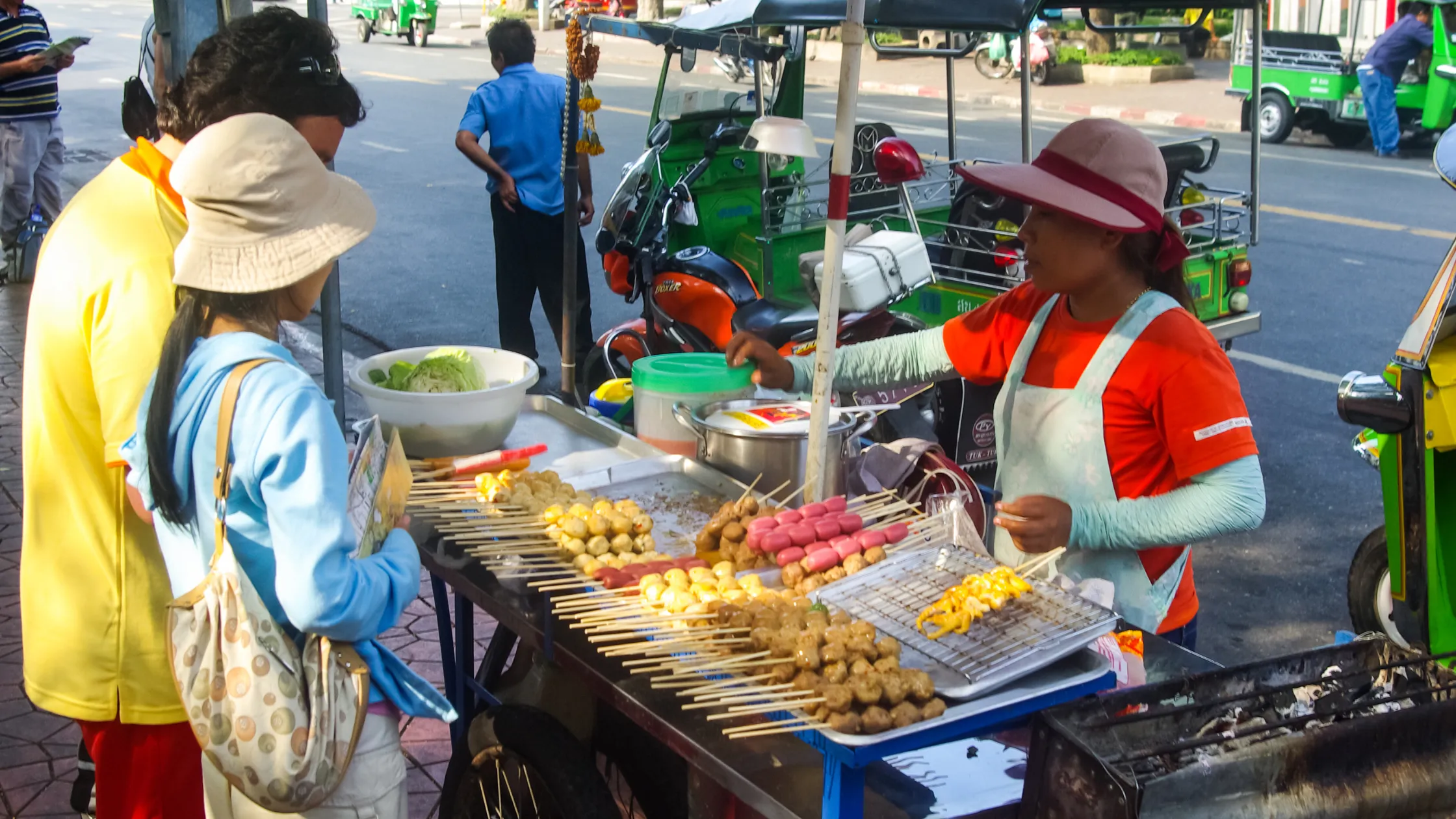
Firstly, the market informal work acts as a safety net for those left out by the formal system.
In a country where unemployment reached 14.7% in 2021, according to the IBGE, the informal sector absorbed millions of workers who would otherwise be helpless.
It is, in essence, a space for inclusion for young people without experience, elderly people without formal retirement, and women who balance work with domestic responsibilities.
This absorption capacity is one of the pillars that sustain families throughout Brazil.
For example, consider Ana, a 45-year-old seamstress from the interior of Bahia.
After losing her job at a textile factory, she began producing handmade masks during the pandemic.
Without a diploma or formal experience required, Ana found a way to support her three children in the informal market, selling her creations at local fairs and on social media.
His story illustrates how informal work offers a gateway for those who face barriers to the formal market, such as lack of qualifications or age discrimination.
Furthermore, the informal sector is fertile ground for innovation.
++ How to overcome anxiety caused by financial problems

Small entrepreneurs like Ana not only generate income, but also create local solutions to specific problems.
Whether selling homemade food, offering cleaning services, or developing apps, these workers fill gaps that the formal market often overlooks.
Thus, informal work is not just a palliative, but a dynamic ecosystem that supports the family and community economy.
| Aspect | Formal Market | Informal Market |
|---|---|---|
| Access | Requires qualification, experience and registration | Low barrier to entry, inclusive |
| Flexibility | Strict schedules and rules | Adaptable schedules, autonomy |
| Benefits | Guaranteed labor rights | No formal benefits, but freedom |
2. Flexibility in Times of Crisis: Adaptation as Survival

Secondly, the flexibility of the informal labor market is one of its greatest assets, especially in times of economic instability.
Unlike formal jobs, which often require long contracts and lengthy selection processes, the informal sector allows workers to reinvent themselves quickly.
In times of crisis, such as the 2015-2016 recession or the 2020 pandemic, this agility was crucial for Brazilian families to maintain their income.
An illustrative case is that of João, an app driver in Rio de Janeiro.
After being fired from a logistics company, he started working as a food delivery driver.
The ability to adjust his schedule and choose his workdays allowed João to support his wife and young daughter, even in a climate of uncertainty.
This ability to adapt, an intrinsic characteristic of the informal market, is like a lifebuoy in turbulent seas: it keeps people afloat when everything seems to be sinking.
Furthermore, the flexibility of informal work also empowers workers to explore multiple sources of income.
A street vendor might, for example, combine selling products with occasional services, such as home repairs.
This diversification reduces dependence on a single activity and increases financial resilience.
In a country where formalization is not always accessible, the informal market becomes a laboratory for survival, where creativity and autonomy are the main tools.
| Crisis | Impact on the Formal Market | Informal Market Response |
|---|---|---|
| Recession 2015-2016 | Mass layoffs, job cuts | Increase in street vendors and freelancers |
| Pandemic 2020 | Business closures, unemployment | Growth in app-based deliveries and online sales |
| Inflation 2022-2023 | Reduction in purchasing power | Diversification of informal activities |
3. Challenges and Limitations: The Other Side of the Coin
Despite its benefits, the informal labor market is not without its challenges.
Firstly, the lack of labor rights, such as vacation pay, 13th-month salary or unemployment insurance, puts workers in a vulnerable position.
This precariousness is exacerbated by the lack of access to social security, which leaves many families exposed to financial risks in the event of illness or retirement.
So while the informal sector is sustaining, it also requires workers to be extremely resilient.
Furthermore, the stigmatization of informal work is a significant obstacle.
These workers are often seen as “unskilled” or “marginal,” when in fact they are exercising their agency to survive in a system that excludes them.
For example, a 2023 IBGE survey revealed that 38% of the Brazilian workforce was in the informal sector, a number that reflects not only the economic crisis, but also the adaptability of these workers.
Ignoring this reality is turning a blind eye to an essential part of the Brazilian economy.
Finally, a lack of regulation can lead to exploitation.
Without formal contracts, informal workers are subject to abuses, such as exhausting work hours or unfair pay.
However, the solution is not to demonize the informal market, but to create public policies that integrate it into the economic system, offering protection without suffocating its essence.
Like a tree growing in arid soil, informal work flourishes despite adversity, but needs care to reach its full potential.
| Challenge | Impact | Possible Solution |
|---|---|---|
| Lack of rights | Financial vulnerability | Microcredit and access to social security |
| Social stigma | Devaluation of the worker | Awareness campaigns |
| Exploration | Precarious working conditions | Light inspection and cooperatives |
4. Social and Community Impact: Beyond Income
More than just a source of income, the informal labor market strengthens community ties and promotes solidarity.
In many communities, informal workers are central figures, such as market vendors who know every neighbor by name or artisans who preserve cultural traditions.
This proximity creates support networks that go beyond financial support, offering emotional and social support in difficult times.
Furthermore, informal work is often a space of empowerment for marginalized groups.
Women, for example, find in the informal sector a way to balance work and family care, while young entrepreneurs develop skills that the formal market does not value.
This dynamic transforms informal work into a catalyst for social inclusion, albeit an imperfect one.
By analogy, the informal labor market is like a river that flows through tortuous paths, but finds ways to nourish the land around it.
It does not follow the straight path of formal roads, but its presence is indispensable for the life of entire communities.
Therefore, recognizing their importance is the first step towards valuing the workers who, with sweat and creativity, sustain Brazil.
5. Informal Labor Market: Frequently Asked Questions
| Question | Response |
|---|---|
| Is informal work illegal? | No, informal work isn't necessarily illegal. It occurs outside of formal labor regulations, but many activities, such as street vending or freelancing, are legitimate as long as they comply with municipal and tax laws. |
| Who are informal workers? | They are people of different ages and profiles, including salespeople, app drivers, artisans, caregivers and freelancers, who do not have a formal employment relationship. |
| Can informal work be sustainable in the long term? | Yes, with supportive policies, such as access to microcredit and social security, informal work can be a stable source of income and even evolve into small, formal businesses. |
| What is the impact of informal work on the economy? | It represents approximately 38% of the Brazilian workforce (IBGE, 2023) and is essential for the circulation of income in local communities. |
Informal labor market: Conclusion
In short, the informal labor market is much more than a second-class alternative.
It is a pillar that supports Brazilian families, offering inclusion, flexibility and opportunities where the formal market fails.
However, its relevance should not overshadow its challenges, such as precariousness and the lack of social protection.
The future of informal work depends on public policies that value its contribution without erasing its essence.
Instead of stigmatizing these workers, it's time to recognize their resilience and creativity.
After all, in a Brazil with so many inequalities, the informal market is a reflection of the daily struggle of millions of people who, against all odds, find ways to prosper.
How, then, can we build a system that honors this strength without suffocating it with bureaucracy?
The answer lies in listening to workers, supporting their initiatives, and celebrating their ability to transform adversity into hope.
