
Biometric lending is making its way into the financial system.
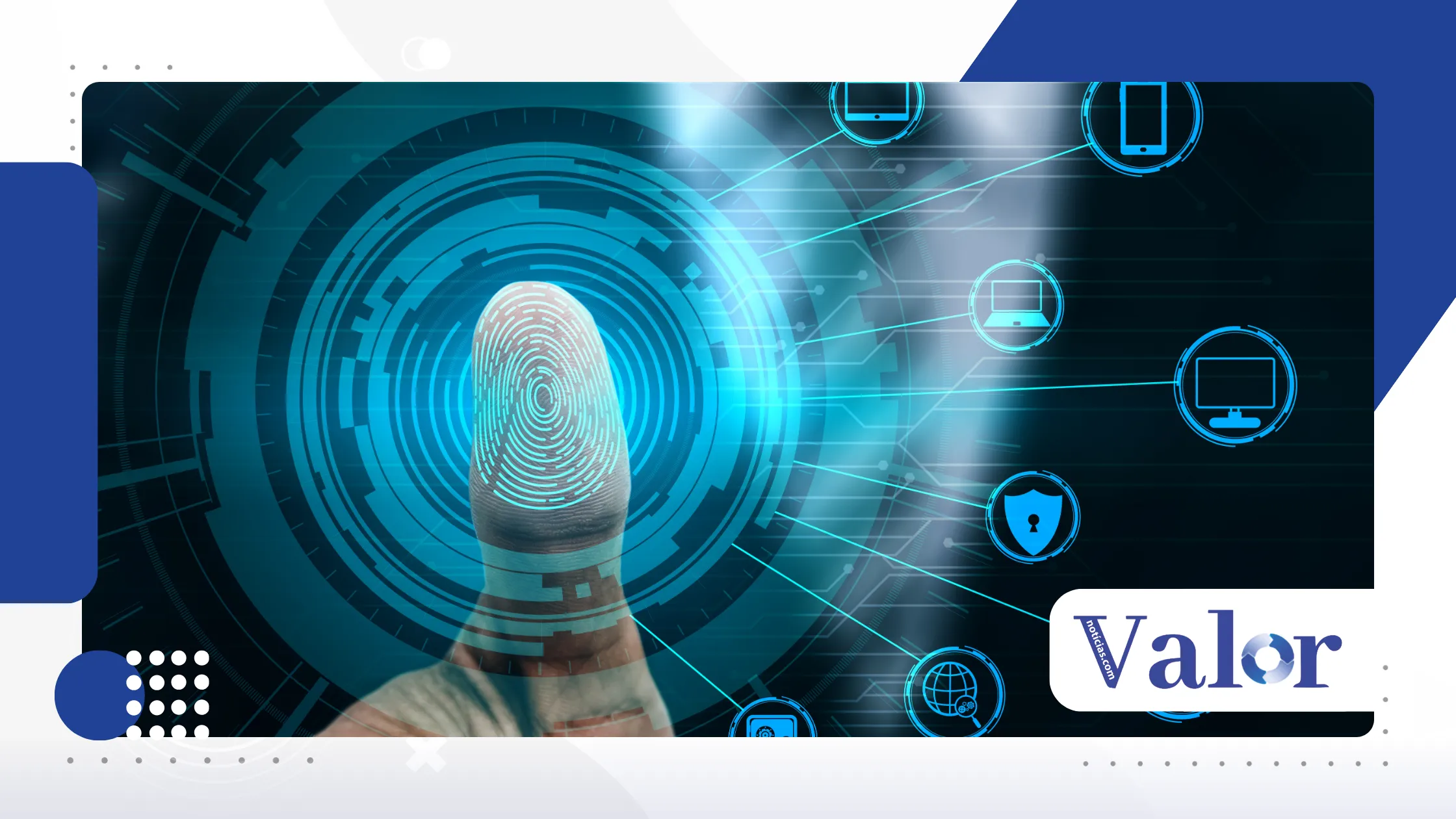
THE Loan with biometrics It will solidify in 2026 as the watershed moment between bureaucratic credit and the financial fluidity demanded by contemporary life.
Advertisements
It's not just about replacing a forgotten password with a glance at the camera, but about a profound restructuring of digital trust.
The evolution of sensors in mobile devices has allowed financial institutions to eliminate layers of friction, replacing rigid protocols with the user's unique biological identity.
This guide delves into the mechanics of this technology, the nuances of data security, and the real impact this transition has on your purchasing power and asset protection.
Summary
- The engineering behind facial recognition.
- The weight of the LGPD (Brazilian General Data Protection Law) and data sovereignty in 2026.
- Operational efficiency versus user convenience
- X-ray: The credit market in numbers
- Perspectives on decentralized digital identity
How does biometric lending work in practice?
Forget about filling out endless forms or uploading documents that almost always result in reading errors.
The hiring process via facial recognition uses high-fidelity algorithms to validate your identity in a fraction of a second.
When requesting the Loan with biometricsThe system cross-references specific points on your face with robust government databases, such as those of the Superior Electoral Court.
There is something fascinating, and for some, slightly unsettling, about the precision with which the software distinguishes a real face from a sophisticated fraud attempt.
This direct integration shortens the process. What previously took days of human analysis is now resolved by an intelligence that processes credit risk while you still have the application open.
The most modern fintech companies have implemented third-generation "liveness detection," requiring subtle movements that prove there is a living person on the other side of the lens, and not a mask or AI-generated video.
What are the main advantages of this type of loan?
The drastic reduction of identity fraud is the cornerstone of this approach, tackling a problem that historically made credit more expensive for good payers.
When the bank is absolutely certain of who is on the other side, the risk premium falls, and this saving, albeit slowly, begins to be passed on to the consumer.
For the customer, freedom is the greatest gain. Signing a contract with a fingerprint or a glance eliminates the burden of carrying physical documents or managing complex password managers.
THE Loan with biometrics It also offers a hidden advantage: scoring accuracy. Biometric authentication creates a much more reliable transaction history, allowing institutions to offer customized rates.
Furthermore, the financial sector breathes a sigh of relief with the resource savings, abandoning mountains of paper and physical filing logistics that, in 2026, sound like relics of an analog and inefficient past.
Is data security guaranteed in 2026?
With the maturation of the LGPD (Brazilian General Data Protection Law), the handling of sensitive information has ceased to be a compliance promise and has become the core of banking reputation.
Biometrics are not saved as an image that someone can "steal" from a server; they are transformed into a complex and irreversible mathematical code.
This means that, even in the unlikely event of a leak, the data obtained by the criminal would be useless without the original decoding algorithm.
By opting for Loan with biometricsYou are entrusting your identity to a high-tech digital vault.
It's a common misconception that we're losing privacy by using facial recognition. In reality, we're making life harder for those who profit from traditional data theft.
Who can apply for credit using facial recognition?
Technology has democratized access. Today, the range extends from retirees seeking secure loans to entrepreneurs needing working capital during opportune times.
Payroll-deducted loans were, by necessity, the laboratory for this revolution. Protecting senior citizens from scams perpetrated by malicious third parties became a priority mission for the Central Bank and large institutions.
Currently, the Loan with biometrics It is the standard for any operation that requires speed, such as financing vehicles at the dealership counter or installment payments for high-value purchases.
Ease of use reduces digital exclusion. After all, using your own body as a validation key is much more intuitive than navigating through complex password recovery menus.
+ Alternative scoring is gaining traction in credit granting.
Comparison of Credit Options in 2026
Below, we detail how the biometric paradigm compares to the conventional model of passwords and tokens.
+ Stricter credit granting changes the borrower profile.
| Analysis Variable | Credit by Password (Legacy) | Credit with Biometrics (Standard) |
| Release Time | Up to 48 hours | Instantaneous / Minutes |
| Security Level | Vulnerable to phishing | High Biological Protection |
| User Experience | High Friction | Invisible Flow |
| Approval Rate | It depends on manual verification. | Automation via Government API |
What is the impact of biometrics in combating financial fraud?
The use of iris biometrics and 3D facial recognition has elevated national security to a level of global excellence.
Organized crime, which previously thrived on falsifying identity cards and taxpayer identification numbers, now faces a biological barrier that cannot be replicated on a mass scale.
When you start a Loan with biometricsThe system performs a silent scan against lists of suspects and atypical behavior patterns, blocking the transaction before it is even completed.
This layer of protection is what allows the financial system to offer higher credit limits via mobile phone, something unthinkable a few years ago due to the systemic risk of account hacking.
The social engineering scam, where the criminal convinces the victim to hand over a code, loses its effectiveness because the final step requires the physical and exclusive presence of the account owner.
How does the Central Bank regulate these operations?
Central Bank regulations have become more sophisticated to keep pace with the rapid advancement of technology. The focus now is on ensuring that biometrics is a clear expression of will, not an induced act.
The guidelines require banking applications to use trusted execution environments, ensuring that the captured image is not intercepted or manipulated by malware on the user's device.
In this way, the Loan with biometrics It enjoys legal security that protects both the bank and the borrower in case of future disputes.
Transparency remains the cornerstone: the Total Effective Cost (TEC) must be immediately apparent to the customer before any blink at the camera, upholding their right to full information.
Where can I find the best rates for biometric loans?
The most advantageous conditions usually arise in digital banks and cooperatives that have invested heavily in data infrastructure and have lower fixed costs than traditional banks.
"Open finance" platforms use your biometric verification to access your history with other institutions, allowing them to compete to offer the lowest rate for your profile.
When prospecting a Loan with biometricsDon't be seduced by the speed of a click alone. Technological ease should be a means to find lower interest rates, not an excuse to accept the first offer.
Read the terms with the same care you would take when signing a document. A digital contract has the same legal force and requires the same financial caution.
+ Digital credit trends for the coming years
Conclusion: What are the future trends for digital identification?
The horizon points towards behavioral biometrics. The system will learn to recognize the pressure of your thumb on the screen, the angle at which you hold the device, and even your typing cadence.
This will create continuous verification. It will no longer be necessary to "strike a pose" for the... Loan with biometricsThe system will simply recognize you by the natural way you interact with your smartphone.
Integration with smart cities and facial recognition payments will make credit an omnipresent and invisible resource, available exactly where the consumer needs it.
This evolution reflects a financial system that is finally ceasing to treat the customer as an account number and instead recognizing them as a unique individual with inimitable traits and behaviors.
FAQ – Frequently Asked Questions
1. Could the system malfunction if I change my appearance (beard, glasses)?
The 2026 algorithms are trained to identify bony points and interocular distances that do not change with accessories or facial hair. Failures are rare and usually linked to poor lighting.
2. Is my data safe from AI hackers?
Institutions use quantum cryptography to protect biometric templates. Zero risk doesn't exist, but biometrics are exponentially more secure than any numerical password.
3. Is biometric borrowing more expensive because of the technology?
On the contrary. Reducing losses from fraud allows banks to operate with healthier margins, which tends to make credit cheaper in the long run.
4. Can I disable biometrics and go back to using passwords?
Yes, most banks allow the choice, but the user should be aware that security levels and credit limits may be reduced due to the higher risk.
The migration to biological authentication models is a sign of the maturing of the Brazilian market. Loan with biometrics It is the meeting point between technical robustness and respect for the citizen's time.
To understand the macroeconomic guidelines that enable these innovations, it is worth following the technical notes of... National Monetary Council (CMN), which shapes the future of our financial system.
